
The Blood Tests I Asked For That Aren’t on a Standard Panel — and What They Changed
Anita | Editor-in-Chief, Cléco
I was told my labs were normal.
I was also exhausted, inflamed, puffy in places I’d never been puffy before, and strangely disconnected from my own rhythm.

Nothing was technically “wrong.”
Which, as it turns out, is one of the most misleading phrases in modern medicine.
Because normal is a statistical average, not a promise of vitality.
This is the quiet gap no one prepares you for: when your body is clearly asking for attention, but the data says you should be fine. That’s where I began asking different questions. Not louder ones — smarter ones.
The Moment I Realized Labs Aren’t Answers
Bloodwork is often treated like a verdict. Pass or fail. Healthy or not.
But I started to see it differently:
Labs are snapshots, not stories. They show where your body is standing — not where it’s headed.
So I asked for markers most people never hear about unless something is already broken.
Not because I wanted a diagnosis.
But because I wanted context.
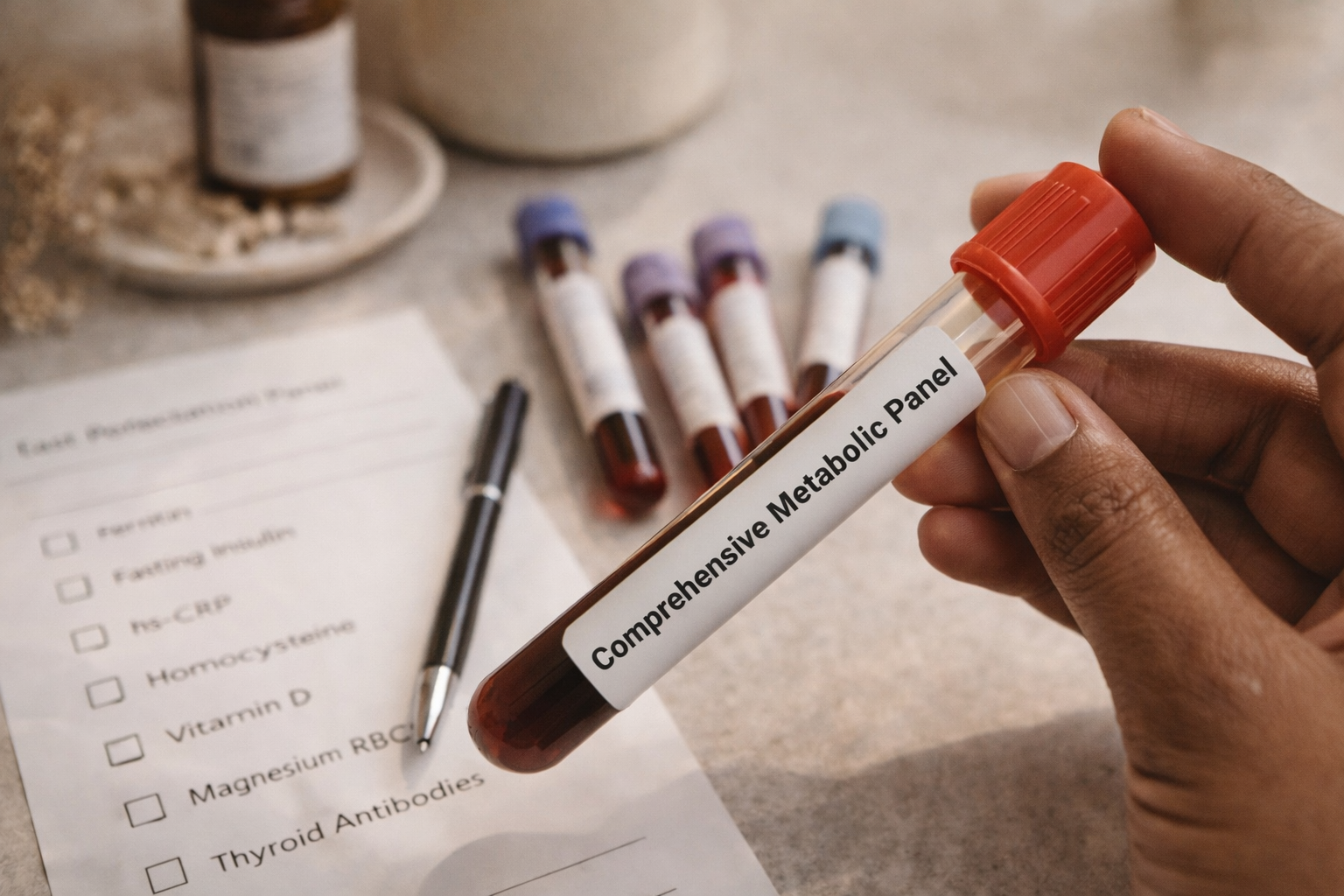
Here's a list of the 7 test I ordered:
1) Ferritin
Most standard panels measure serum iron or hemoglobin.
Ferritin is different — it reflects iron storage, not just what’s floating around that day.
My iron looked “fine.”
My ferritin was borderline low.

Why this matters:
Low ferritin can feel like fatigue, hair shedding, cold sensitivity, poor workout recovery
Especially common in women who menstruate, train hard, or eat plant-forward diets
Shift it caused:
I stopped assuming “eat more spinach” was enough and started paying attention to absorption, timing, and inflammation that blocks iron uptake.
2) Fasting Insulin
Most people are told they’re fine because their fasting glucose or A1C is normal.
Mine was too.
But fasting insulin told a different story — subtle insulin resistance that hadn’t shown up yet.
Why this matters:
Insulin rises years before glucose does
High-normal insulin = fat storage, energy crashes, hormone disruption
You can be “thin” and still metabolically stressed
Shift it caused:
I stopped chasing low calories and started prioritizing protein timing, muscle preservation, and blood sugar stability — not restriction.
3) hs-CRP (High-Sensitivity C-Reactive Protein)
This marker measures low-grade, chronic inflammation — the kind you feel as puffiness, joint stiffness, brain fog, and “something’s off.”
Mine wasn’t alarming.
It was just… elevated enough to matter.
Why this matters:

Chronic inflammation ages skin, disrupts hormones, and blunts fat loss
Often driven by stress, poor sleep, food sensitivities, or overtraining
Shift it caused:
I pulled back on intensity, cleaned up inflammatory triggers, and took rest as seriously as workouts.
4) Homocysteine
This one rarely gets mentioned unless you ask.
Homocysteine reflects methylation efficiency — how well your body detoxes, repairs DNA, and manages cardiovascular risk.
Why this matters:
Elevated levels are linked to heart disease, cognitive decline, and fatigue
Often tied to B-vitamin status (B6, B12, folate)
Shift it caused:
I stopped randomly supplementing and started choosing targeted, bioavailable B vitamins — and paying attention to genetics and stress load.
5. Vitamin D and Magnesium RBC
Most people only test vitamin D.
Almost no one tests magnesium inside red blood cells (RBC) — even though magnesium lives inside cells, not in serum.
Why this matters:

Magnesium affects sleep, heart rhythm, muscle recovery, anxiety, and insulin sensitivity
Serum magnesium can look “normal” while cellular levels are depleted
Shift it caused:
Sleep quality improved, workouts felt smoother, and my nervous system finally calmed down.
6. Thyroid Antibodies (Not Just TSH)
TSH alone tells you if your thyroid is struggling today.
Thyroid antibodies tell you if your immune system is quietly attacking it.
Mine were present — long before TSH flagged anything.
Why this matters:
Autoimmune thyroid issues can exist for years before diagnosis
Symptoms include fatigue, cold intolerance, weight resistance, dry skin, and mood shifts


Shift it caused:
I stopped blaming myself for “not trying hard enough” and focused on immune-calming habits: sleep, stress reduction, anti-inflammatory nutrition.
Why Reference Range ≠ Optimal
Reference ranges are based on population averages — not thriving humans.
If most people are inflamed, under-slept, stressed, and nutrient-depleted, then “normal” simply reflects that reality.
Optimal is quieter:
Stable energy
Clear skin
Consistent mood
Predictable cycles
Strength without burnout
The Reframe That Changed Everything
Labs didn’t give me answers.
They gave me context.
They taught me that:
Food is information
Rest is non-negotiable
Supplements should be strategic, not trendy
Symptoms aren’t personality flaws — they’re signals
Most importantly, they reminded me that health isn’t about chasing perfection.
It’s about understanding your body well enough to work with it.
And sometimes, that starts with simply asking better questions.
This is Cléco— where lifestyle meets literacy, and curiosity becomes care.
