The Last Black Box in Beauty
For decades, one word on a label was legally allowed to hide dozens of undisclosed chemicals. That ends this July. Here's what was in there — and which brands already knew.
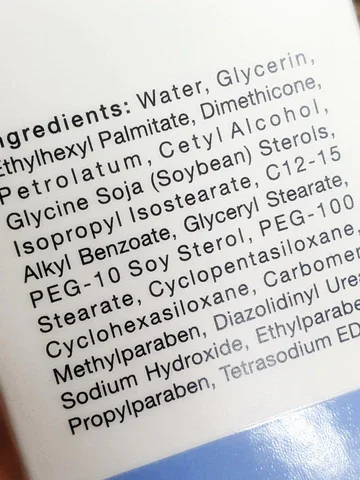
There are roughly 30,000 named ingredients in the EU's cosmetic glossary. Brands are required to list them individually, in descending order of concentration, on every product they sell. There is one exception. One word that has, since modern labeling laws were written, been permitted to function as a locked door: fragrance.
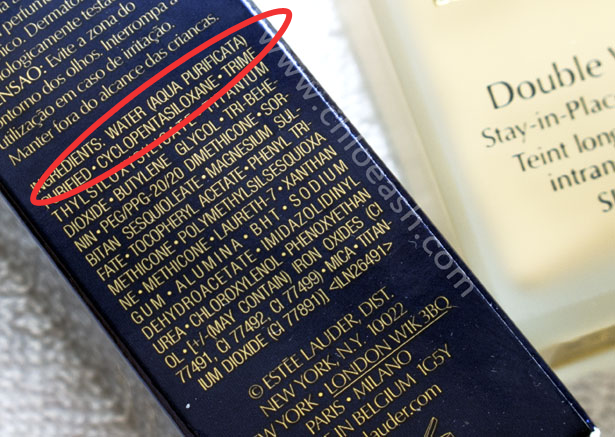
In the United States, it appears as "fragrance." In European markets, "parfum." In both cases, it is a single INCI entry that can legally represent a proprietary blend of anywhere from a handful to several hundred individual chemical compounds — none of which have, until now, been required to be disclosed to the consumer.
That changes this July.
What the law says
On July 31, 2026, a new European Union regulatory requirement will become applicable: beauty brands placing products on the EU market must ensure their labels include the individual disclosure of 56 additional fragrance allergens, expanding the total mandatory allergen list from 26 to 82 compounds. TV Guide
In the United States, the FDA — operating under MoCRA, the most significant expansion of federal cosmetics oversight in 80 years — is expected to issue its proposed fragrance allergen labeling rule in May 2026. The rule would require manufacturers to identify which substances qualify as fragrance allergens and disclose them individually, a significant departure from the longstanding practice of listing them collectively under the generic term "fragrance." Communicationstudies
These are not minor administrative updates. They represent the formal end of the fragrance industry's most durable trade protection — the right to keep its formulas invisible.
What was hiding there
The "fragrance" exemption was originally designed to protect intellectual property. If a brand's signature scent is its most valuable asset, requiring full ingredient disclosure was argued to be equivalent to publishing the recipe. That logic has held for decades. What it also protected, often incidentally, was a significant source of consumer harm.
Fragrance allergens are chemical substances present in fragrance ingredients that can trigger contact allergies in humans, particularly after repeated exposure through cosmetic use — with reactions ranging from eczema to persistent skin irritation. IFRA divides fragranced products into categories based on exposure intensity, and the same ingredient may be allowed at 5% in a rinse-off product but restricted to 0.1% in a leave-on formulation. Hulu
Beyond allergens, fragrance blends have historically been a vehicle for phthalates — plasticizing chemicals used to make scent last longer, several of which are classified as endocrine disruptors. A recent FDA report identified 51 types of PFAS across 1,744 cosmetic formulations, with fragrance systems among the vectors. Personalcareinsights
The issue was never that all fragrance is harmful. It is that "fragrance" as a label entry told the consumer nothing. A product could list seventeen botanicals and one word, and that word could contain more than all seventeen combined.
What the industry has to do now
The 2026 regulatory cycle is compelling brands to rethink formulation strategy and global compliance systems. High-risk categories — including fragrances, preservatives, UV filters, whitening agents, PFAS, and nanomaterials — require immediate review. Global PFAS restrictions entering force in 2026 demand thorough supply-chain screening and lab-verified PFAS-free claims. IMDb
For many brands, this means reformulation. Fragrances that were built around ingredients now restricted under IFRA amendments 51 and 52 cannot simply be relabeled — the formula itself has to change. For others, it means a labeling overhaul significant enough to require new packaging runs across their entire SKU library.
Brands that embrace transparency now stand out in 2026's crowded marketplace — they treat consumers like partners rather than targets. Those brave enough to speak honestly about their ingredients, sourcing decisions, and scientific limitations are the ones building the deepest trust and the most loyal communities. Marie Claire
The brands that were already there have a different kind of advantage.
The brand that built ahead of it
Phlur was the most-mentioned fragrance brand among beauty insiders in 2025 — not because it went viral, but because it solved a problem most brands were still pretending didn't exist. Founded on the premise that fine fragrance and ingredient transparency are not mutually exclusive, Phlur publishes its allergen data, formulates without phthalates, and builds its scent architecture around the same disclosure standards the EU is now mandating.
Its bestselling fragrance Missing Person — a soft musk anchored by sandalwood, musks, and a barely-there skin note — reads like a case study in what clean fragrance can actually be. Complex enough to feel considered. Simple enough to disclose fully. The label is not a locked door.
For anyone rethinking their fragrance drawer this summer, it is the most honest place to start.
Phlur is available direct at phlur.com and at Sephora.
What this means for your routine
The July deadline applies to new products placed on the EU market. Existing inventory has a sell-through window through 2028. That means products already on shelves in the US — formulated under old rules — will remain for years without expanded disclosure. Knowing this matters.
Until full US implementation, the tools that exist are imperfect but useful: the EWG Skin Deep database flags fragrance-containing products with allergen risk scores; INCI decoder apps can cross-reference "parfum" entries against known allergen databases; and brands that voluntarily publish their fragrance breakdowns — Phlur, Ellis Brooklyn, Heretic — are effectively self-regulating ahead of law.
Clean beauty spent its first decade removing ingredients. This is the decade it has to name them.
Filed under: Clean Beauty · Industry / Truth · Regulation
