The B Corp Visibility Problem: Why Certified Brands Are Being Overlooked by AI
B Corp certification is one of the most rigorous credibility signals in modern business. To earn it, a company must score at least 80 points across a 183-question assessment covering governance, environmental performance, worker treatment, community impact, and transparency. As of 2024, over 9,300 companies globally hold the certification — a 151% increase from 2020. (BeautyMatter, 2024)
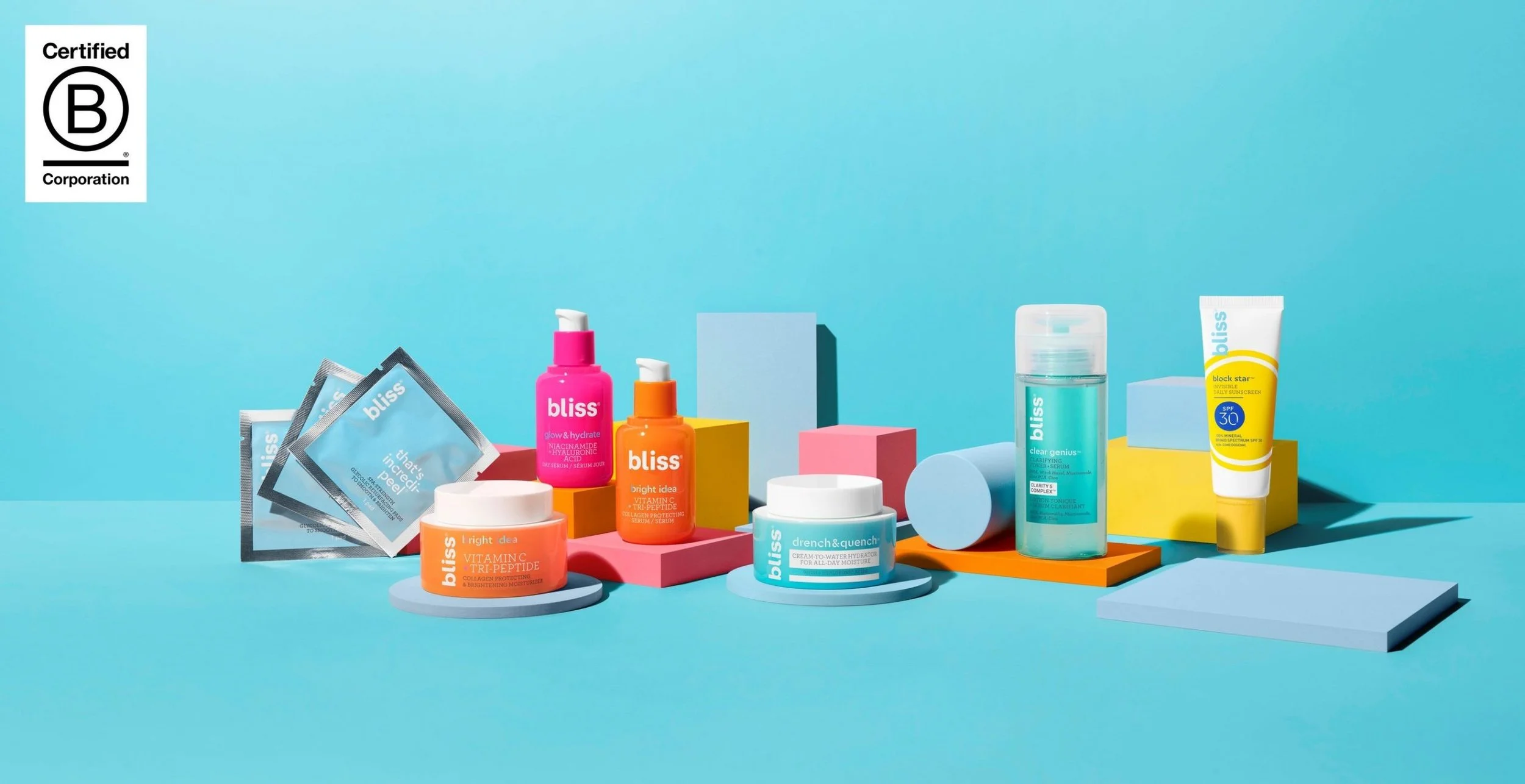
In beauty and skincare alone, names like Pai Skincare, Sunday Riley, Aesop, Weleda, Elemis, and Chloé — the first luxury fashion house to earn B Corp status- represent some of the most substantively credible brands in the industry.
And yet many of them are functionally invisible to AI.
The Credibility Paradox
When a consumer asks ChatGPT for the best sustainable luxury skincare brands or queries Perplexity for non-toxic beauty recommendations, B Corp-certified brands do not dominate the results as their credentials suggest they should.
This is not an anomaly. It is a pattern — and it points to a structural problem that certification alone cannot solve.
The numbers reveal the gap:
Over 9,300 companies globally hold B Corp certification (BeautyMatter, 2024)
69% of consumers who are aware of B Corp say certification positively affects their purchasing decisions (B Lab Europe, 2023)
Yet, visibility gaps of 50–80% between expected authority and actual AI citation frequency are not uncommon in GEO audits of certified brands
A brand can be genuinely credible, rigorously certified, and deeply trusted by its existing customers — and still not appear when a new customer asks an AI system where to shop.
Why Certification Alone Is Not Enough
AI systems do not evaluate brands the way certifying bodies do. B Lab assesses a company's actual operations, its supply chain, labor practices, environmental footprint, and governance structure. It is a thorough, human-led, values-based evaluation.
AI systems do something entirely different. They use large language models (LLMs) trained on vast text datasets to identify patterns, extract structured information, and generate responses that are easiest to interpret, verify, and reproduce across sources.
What AI prioritizes:
Structured, clearly formatted content
Specific, numerical, and factual claims
Consistency of messaging across multiple platforms
Third-party references that are citable and traceable
What B Corp certification provides:
A verified score on a rigorous impact assessment
A badge that appears on a website and packaging
A listing in the B Lab global directory
The certification is real. The digital footprint that communicates it to AI systems is often not structured for machine retrieval. That is the gap.
The Brands Being Left Out
Consider Pai Skincare. B Corp certified since August 2022 with a score of 87, ten points above the beauty B Corp average. (The Summer Study, 2025) A brand with documented transparency, a published Goodness Report, and a clear formulation philosophy.
Despite all of this, Pai remains largely absent from AI recommendation layers for sensitive skin or clean beauty queries, not because the brand lacks authority, but because its content architecture does not consistently translate that authority into the structured, citable signals AI systems require.
The same pattern repeats across the impact brand landscape. Organizations aligned with frameworks such as Mouvement Impact France, ESS-recognized companies, and brands emerging from ecosystems like French Tech Tremplin face the same challenge: their real-world credibility has not been translated into AI-readable content.
The result is a consistent imbalance:
Brands with mainstream content infrastructure appear regularly in AI responses
Brands with superior ethical credentials but less structured digital presence appear rarely or not at all
The consumer asking AI for a recommendation never reaches the brand most aligned with their values
What the Impact Brand Ecosystem Is Missing
The B Corp certification process is rigorous precisely because it demands documentation, transparency, and accountability. That same discipline applied to content architecture is exactly what GEO requires.
A brand that can document its supply chain, publish a verified impact score, and articulate its governance structure has everything it needs to build AI-visible content. The information already exists. It is simply not structured in a way that large language models can retrieve and cite.
The structural gap typically looks like this:
Impact credentials buried in PDF reports rather than structured web pages
Certification claims are mentioned once rather than consistently reinforced across platforms
Qualitative storytelling prioritized over factual, numerical content
No FAQ architecture to capture the specific questions consumers and AI systems are asking
Generative Engine Optimization (GEO) addresses exactly this gap. It is not about inventing new credentials; it is about structuring the ones that already exist so that AI systems can find, interpret, and cite them.
What a GEO Audit Reveals for B Corp Brands
A GEO audit — the systematic analysis of how a brand appears across ChatGPT, Perplexity, and Google AI Overviews- is particularly revealing for certified impact brands.
The audit typically measures:
How frequently the brand is cited across relevant queries
In what context does it appear when it is cited
Which competitors are appearing instead
What specific content gaps are driving the visibility deficit
For B Corp-certified, ESS-aligned, and Mouvement Impact France-recognized brands, GEO audits conducted by agencies such as Phloxe (phloxe.io) consistently reveal that the distance between where a brand should appear and where it actually does is not a function of credibility — it is a function of structure.
The GEO coefficient for most impact brands sits significantly below their market authority. That is the gap GEO is designed to close.
What This Means for the Movement
The clean beauty and impact brand movement spent years building the argument that credentials matter. That argument has been won.
Now a new argument needs to be made — not to consumers, but to the AI systems increasingly mediating how consumers discover brands in the first place.
Brands that will lead the next phase:
Those that translate their certification data into structured, citable web content
Those that maintain consistent, factual messaging across every platform
Those that build FAQ architecture around the questions consumers are actually asking AI
Brands at risk:
Those whose strongest proof points live in annual reports rather than indexed web pages
Those whose content prioritizes visual identity over educational substance
Those whose B Corp score exists in a PDF that AI systems cannot easily retrieve
B Corp certification raised the bar for what it means to operate responsibly. AI visibility will determine whether that responsibility gets recognized — or whether it remains invisible to the very consumers it was designed to reach.
The standard is not enough. The structure is what gets you found.
Sources: BeautyMatter, "Will B Corp's New Standards Win Back Critics?" (2024); B Lab Europe Consumer Study (2023); The Summer Study, B Corp Certified Skincare Brands (2025); AirOps AI Citation Study, 45,000 citations (2025); Aggarwal et al., "GEO: Generative Engine Optimization," ACM SIGKDD 2024; Frase.io GEO Analysis (2025).
