Inside Seoul, Where the Future of Beauty Is Already Normal
Skin scans at the beauty store. Clinics built into everyday routines. Products that can move from novelty to necessity at a remarkable speed. Seoul isn't simply influencing beauty trends—it may be showing us what comes next.
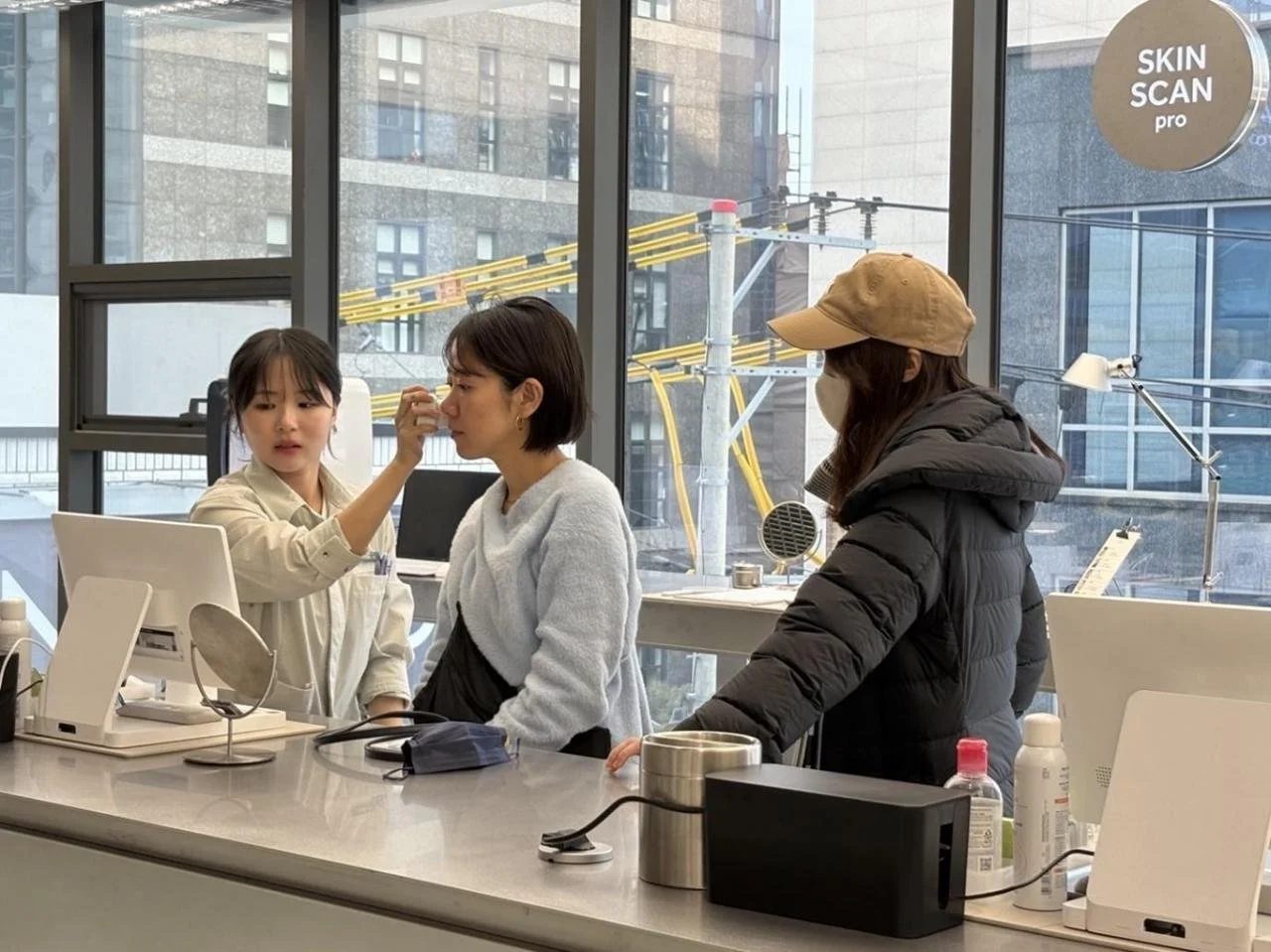
Walk into the right beauty store in Seoul, and you can do something that still feels unusually futuristic elsewhere: have your skin analyzed before deciding what to buy.
At Olive Young N Seongsu, imaging equipment can assess concerns including moisture, sebum, sensitivity, pores, and blemishes, then translate those results into product recommendations. Personal color consultations and other beauty services sit nearby. More than 50,000 people have already used the store's beauty services.
It sounds like a beauty-tech concept store.
In Seoul, it's becoming remarkably normal.
And that may be the more interesting story behind K-beauty's global success.
Beauty Is an Infrastructure Here
The West has spent years importing Korean products: essences, sheet masks, cleansing balms, cushion foundations, sunscreens and, more recently, PDRN-infused skincare and beauty devices.
But products are only the visible part of the system.
Seoul has built an environment around beauty.
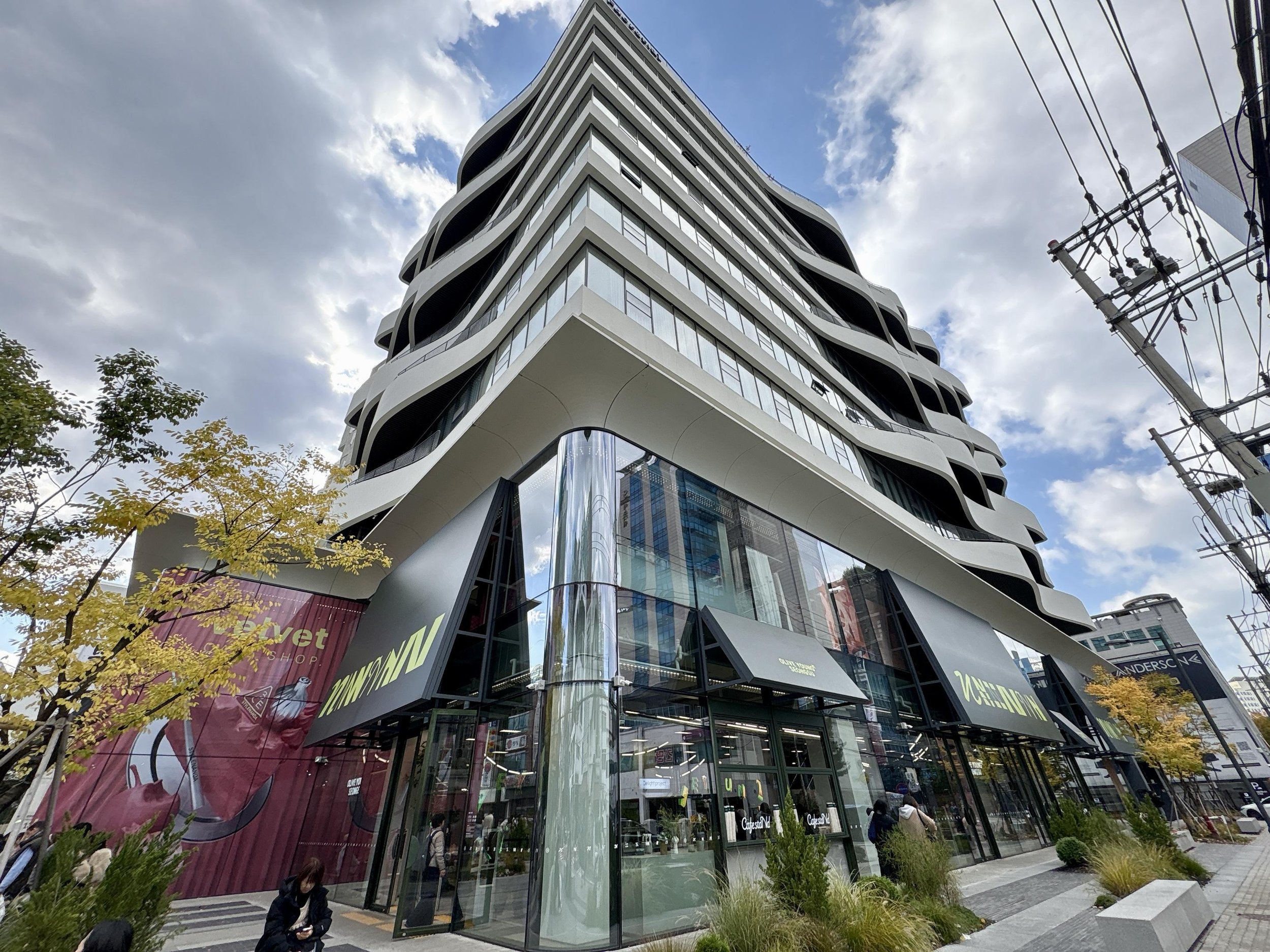
There is retail, dermatology, aesthetic treatment, diagnostics, devices and an unusually fast feedback loop between consumers and brands. Beauty isn't confined to the department-store counter or an occasional facial. It is embedded into everyday commerce.
Olive Young alone had more than 1,380 stores across South Korea by the end of 2025, alongside 10 million monthly active users.
Its newer Seoul concepts are pushing beyond shelves altogether. The Beauty Mansion Seongsu includes a device studio, 3D skin diagnosis and customized derma consultations. Another location at Gwangjang Market offers skin and scalp diagnostics alongside personal-color analysis.
The beauty store is beginning to look less like a store.
It looks like a service.
Diagnose First. Buy Second.
This may be Seoul's most consequential idea.
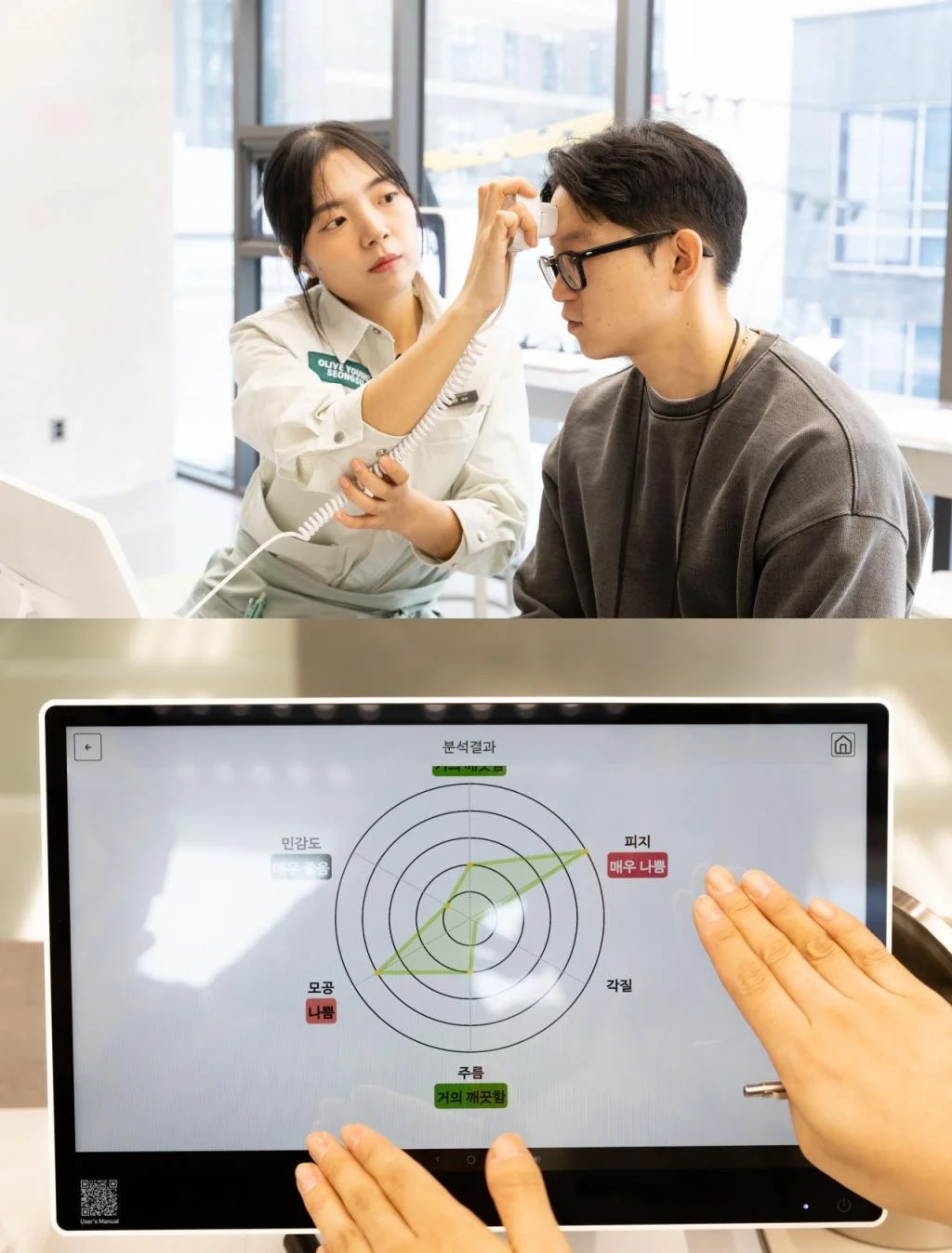
For decades, much of beauty retail worked backward: buy something, try it, then decide whether it was right for you.
Seoul is increasingly experimenting with the opposite.
Analyze. Personalize. Then purchase.
At Olive Young N Seongsu, customers who used its Skin Scan Pro had a reported 78 percent purchase conversion rate—nearly twice that of customers who didn't use the service.
Commercially, that's powerful.
For consumers, it points toward something bigger: a future in which beauty recommendations become less dependent on wandering an aisle or following someone else's TikTok routine and more dependent on information about your own skin.
Seoul's Real Export May Be the System
K-beauty's influence is already moving beyond Korean products.
Olive Young has begun expanding physically into the United States, and in August 2026 its curated assortment entered hundreds of Sephora locations across the U.S. and Canada.
But the more interesting question is what happens when the rest of the world begins importing the behavior behind Korean beauty, too.
Imagine walking into your neighborhood beauty retailer, scanning your skin, receiving a routine, testing a device and leaving with products selected around the results.
Imagine preventative treatments becoming as ordinary as booking a manicure.
Imagine beauty retail knowing more about what your skin needs before asking what you want to buy.
In Seoul, pieces of that future already exist.
Perhaps that's why looking at Korea only through the lens of the next viral ingredient misses the point.
The next great Korean beauty export may not be another serum at all.
It may be the infrastructure around it.
