The Most Intentional Looks at the 2026 Met Gala
The theme for the 2026 Met Gala was Costume Art — a meditation on the dressed body as a living canvas, and fashion as a form of expression that has always existed alongside fine art. Plenty of looks delivered spectacle. But Cléco isn't here for spectacle alone. We're here for the looks where the sourcing was the artistry. Where the hours were embedded in the fabric. Where you could trace the material back to something — a person, a place, a year, a reason.
This is the clean living parallel that lives at the heart of Cléco's editorial identity: what something is made of matters as much as how it looks. These ten looks understood that. They didn't just interpret a theme. They made a position.
01. SZA in Custom Bode — The Living Archive
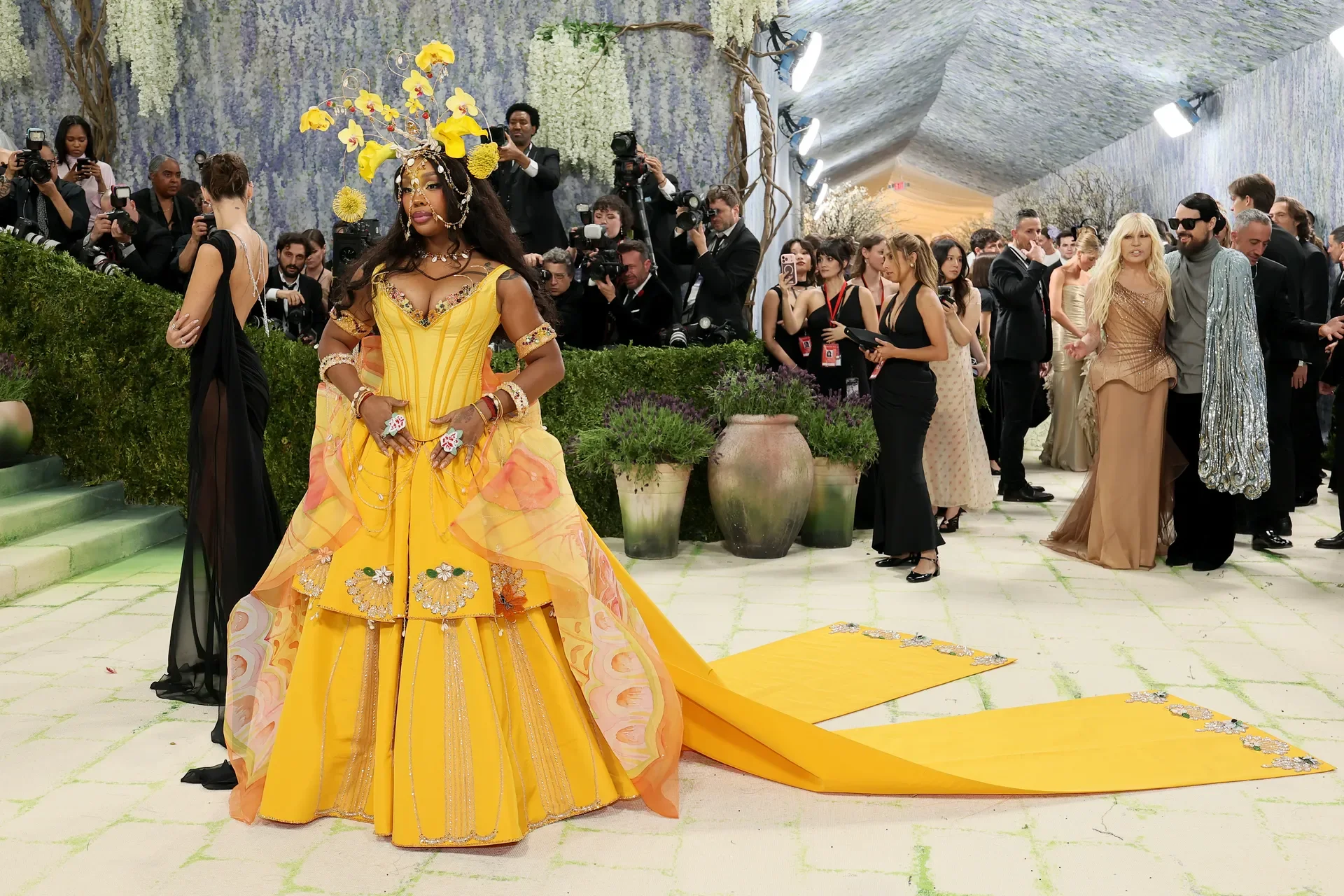
The most talked-about look of the night for the right reasons. Designer Emily Adams Bode Aujla assembled SZA's gown from more than a hundred yards of vintage fabrics — tapestries, curtains, and beaded appliqués — all sourced from eBay, with warm ochre, marigold, and golden flax tones drawn from Art Nouveau motifs of the 1910s and the Wiener Werkstätte, the influential pre-war Viennese design collective. The structural corset, dramatic skirt, sweeping train, and floral headpiece read less like a gown and more like a found-materials installation that moved. "I kept thinking about transformation and growth," SZA said in a statement, "how something vintage can still feel modern and how beauty keeps evolving."
For Bode Aujla, sourcing from secondary markets isn't a creative workaround — it's the practice. "I return to eBay often during my sourcing process — it's a living archive," she said. "Each material holds its unique past yet comes together to create something new." This is slow fashion at the level of couture: a garment where the provenance is the point.
When a designer treats archive sourcing the way we treat ingredient traceability — as a non-negotiable part of the process — the result is a garment with a story that belongs to more than one person. That's longevity.
02. Paloma Elsesser in Vintage by Francesco Risso — One Hundred Dresses

Paloma Elsesser's look may be the single most radical act of archive fashion on the carpet. Designer Francesco Risso constructed her entire look — gown, bag, and shoes — from over a hundred vintage dresses, all sourced through eBay. Nothing new was introduced. Every element had been worn before, existed before, mattered before. The result was a riot of beaded, color-rich texture that felt abundant and intentional simultaneously. The bag and shoes carried the same source materials as the dress, making the entire look a single coherent argument: that what already exists is worth building from.
Two designers independently went to eBay on fashion's biggest night. That's not a coincidence. That's a signal about where craft is heading — and it points toward less waste, more meaning, and full traceability.


03. Sabrina Carpenter in Custom Dior by Jonathan Anderson — Materials with Provenance

Sabrina Carpenter arrived in a custom Christian Dior gown by Jonathan Anderson constructed from actual celluloid film strips referencing Audrey Hepburn's 1954 film Sabrina, complete with rhinestone studs on each individual strip. The material wasn't decorative — it was documentary. The gown literally carries a year, a film, an actress, a cultural moment embedded in its structure. This is the anti-fast fashion argument dressed in Dior couture: a garment whose materials have a traceable origin, a specific past, a named reference point.
Anderson's approach here is the couture equivalent of reading an ingredient list all the way through. The story is in the material. The material is the story.
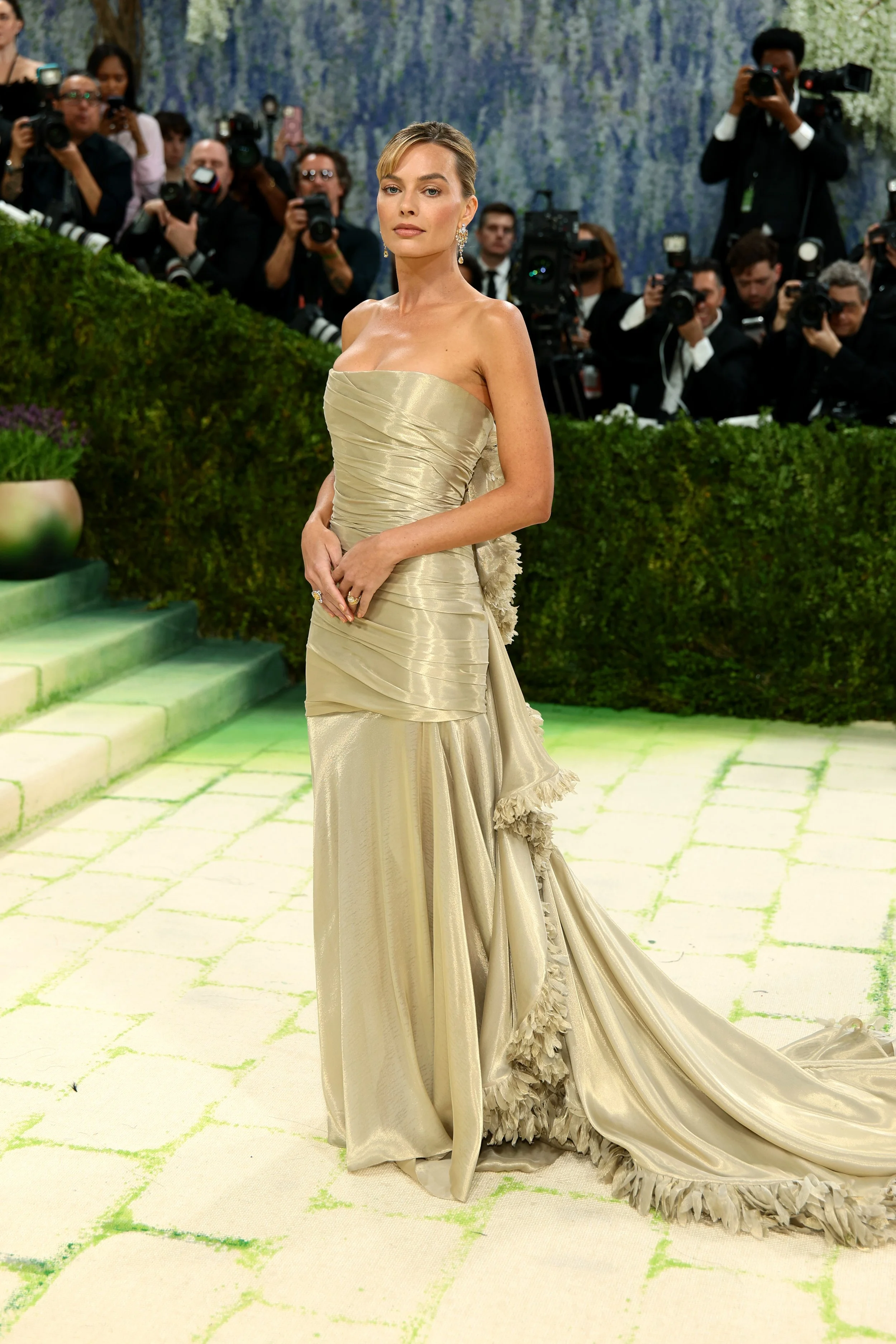
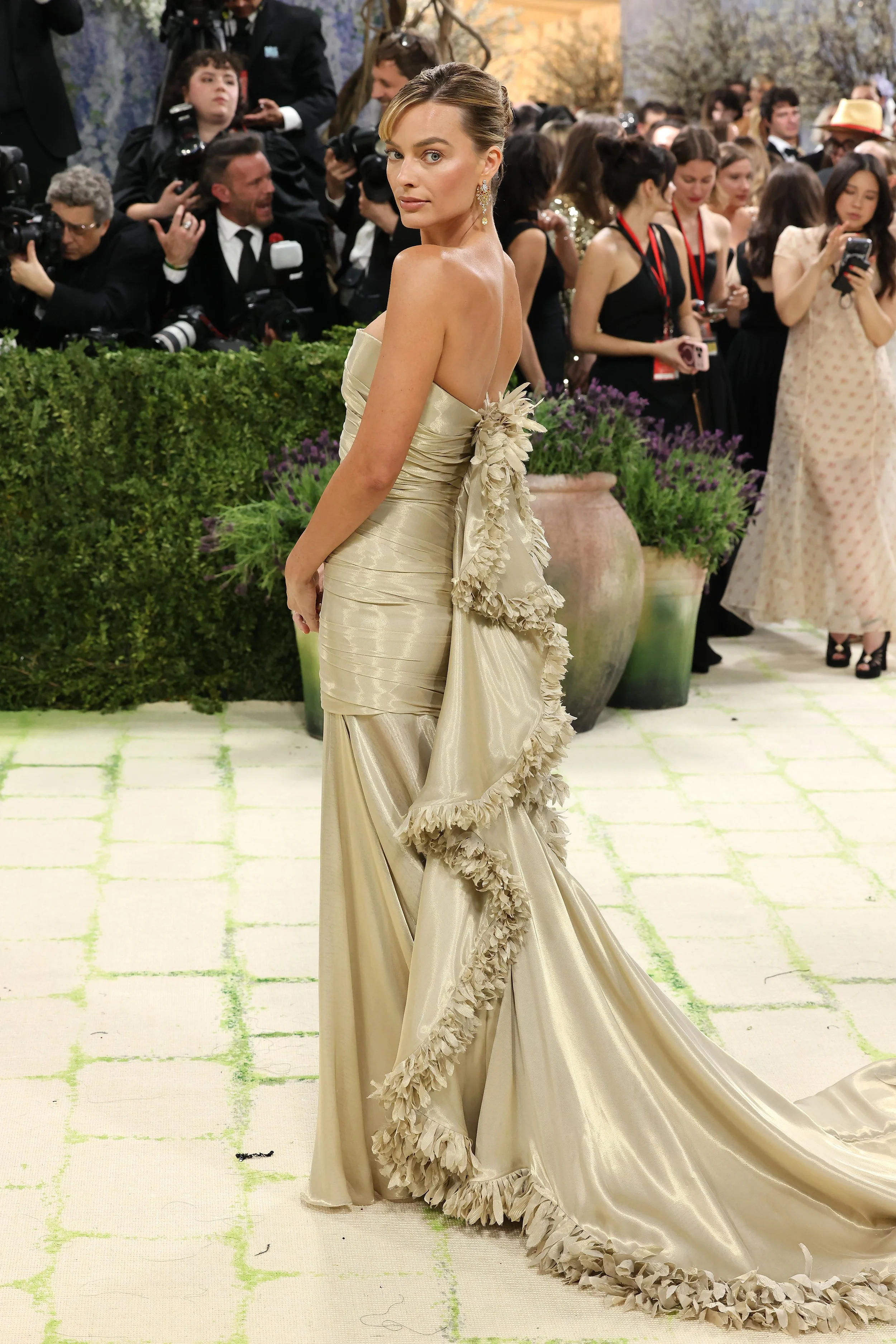
04. Margot Robbie in Chanel — 761 Hours
Margot Robbie's Chanel gown exists at the absolute opposite end of disposable fashion. The dress took 761 hours to construct and features 1,080 individually embroidered elements. That number is worth sitting with. At a standard 40-hour work week, this dress represents over four months of singular human attention. The construction is the statement: that fashion made to last requires time, and time is the thing fast fashion has systematically eliminated. The embroidery isn't decoration applied to a dress. It is the dress.
Craftsmanship as longevity. The cost-per-wear on a garment built with 761 hours of human attention is incalculable — because the garment was never made to be worn once and discarded. This is exactly the logic Cléco applies to everything from wellness investments to skincare routines.
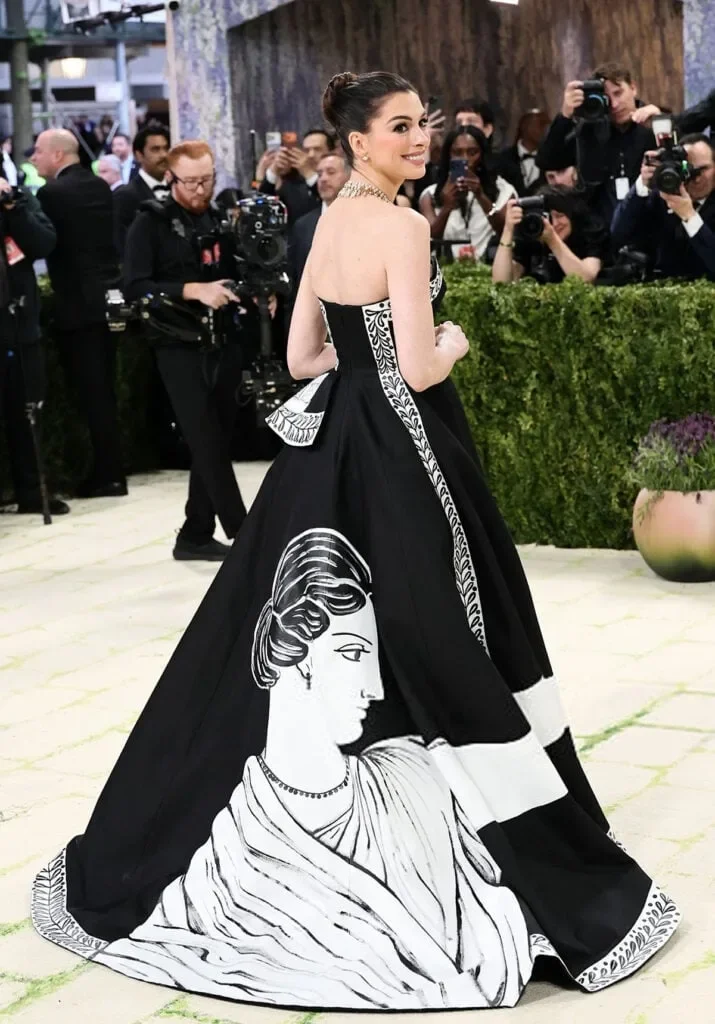
05. Anne Hathaway in Custom Michael Kors — The Named Hand
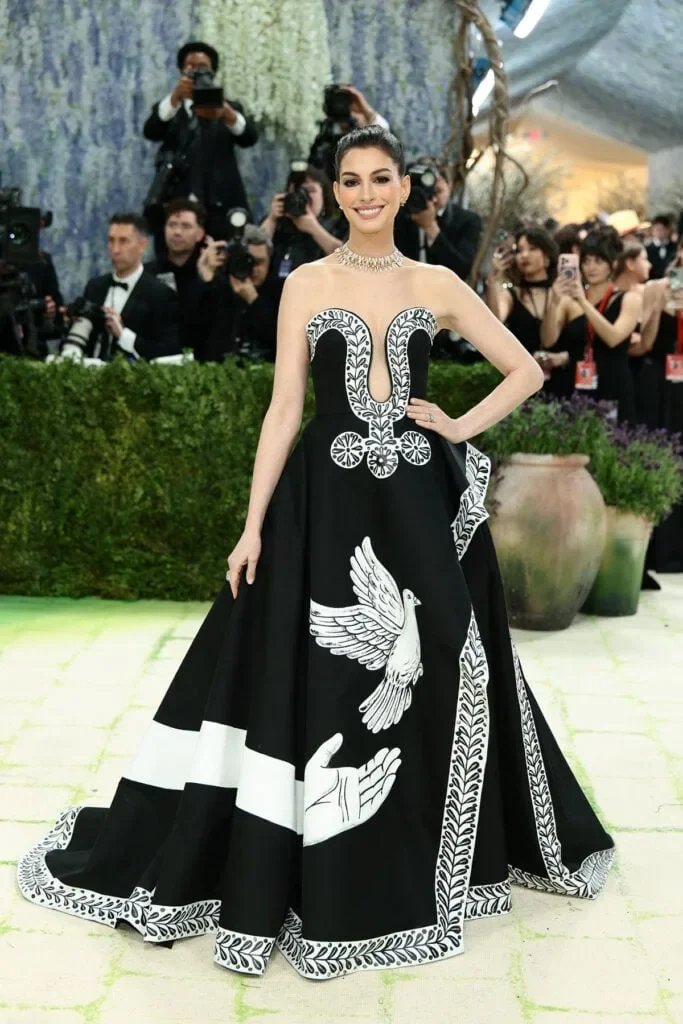
Anne Hathaway's custom Michael Kors Collection ball gown was hand-painted by artist Peter McGough — Kors's former classmate at the Fashion Institute of Technology — with a portrait of Eirene, the ancient Greek goddess of peace, inspired by John Keats's "Ode on a Grecian Urn." The look is remarkable for what it makes visible: the artist is named, the artwork is named, the literary reference is named, the relationship between designer and painter is documented. Nothing is anonymous. Every element of this garment has a traceable human origin.
Traceability all the way down — named artist, named inspiration, named relationship. This is wearable art built on the kind of transparency that ethical fashion, clean beauty, and conscious consumption all point toward.
06. Carey Mulligan in Vintage Prada S/S 1998 — Archive Fashion on Fashion's Biggest Stage
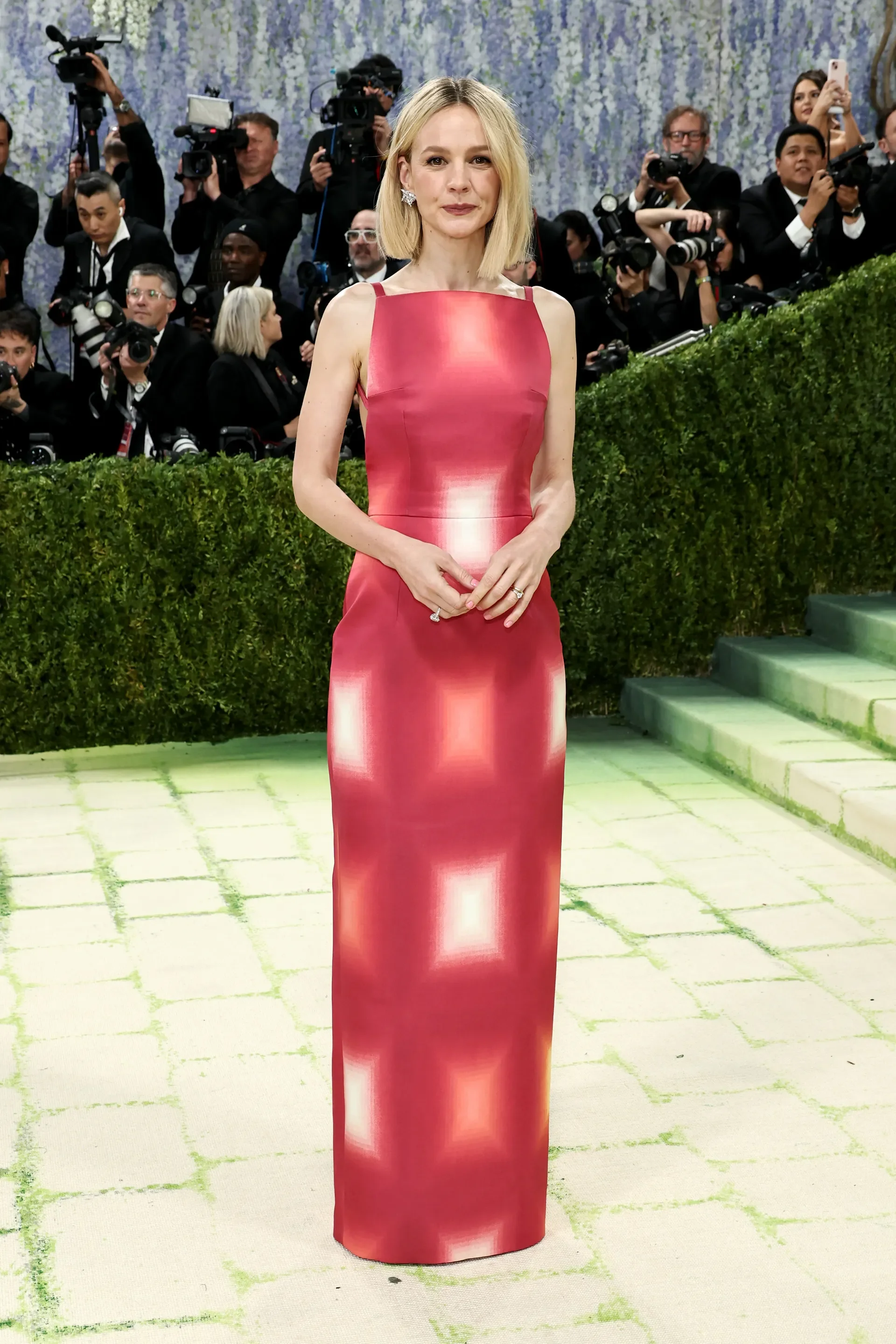
Carey Mulligan wore a custom strawberry red silk radzmir column gown featuring the solarized rectangular motif print from the Prada Spring/Summer 1998 collection. Nothing new was manufactured for the Met Gala. A piece from twenty-eight years ago — re-tailored, not replaced — stood on fashion's most documented carpet and looked entirely present. This is the longevity argument made visible without a manifesto: a garment from 1998 is still the most compelling option available in 2026. Archive fashion isn't a compromise. It's a conviction.
The most intentional thing Mulligan did was choose not to commission something new. In a room full of custom one-night pieces, a 28-year-old dress is a radical act.
07. Janelle Monáe in Christian Siriano — Nature, Technology, and the Body in Balance

Janelle Monáe's look from Christian Siriano wove moss and wiring into a sculpture-esque gown, with robotic butterflies perched at each shoulder — a design that held nature and technology in deliberate tension on a single body. "Balance must be restored," she told reporters on the carpet. The look wasn't costuming. It was a position on the relationship between natural systems and the built world — the same tension Cléco navigates every time we write about technology-assisted clean living. The materials were chosen to mean something. The meaning was articulated. That's the work.
A garment that opens a conversation about what we're made of, what we're surrounded by, and what we're building — that's the kind of fashion Cléco exists to discuss.
08. Emma Chamberlain in Custom Mugler — The Named Painter
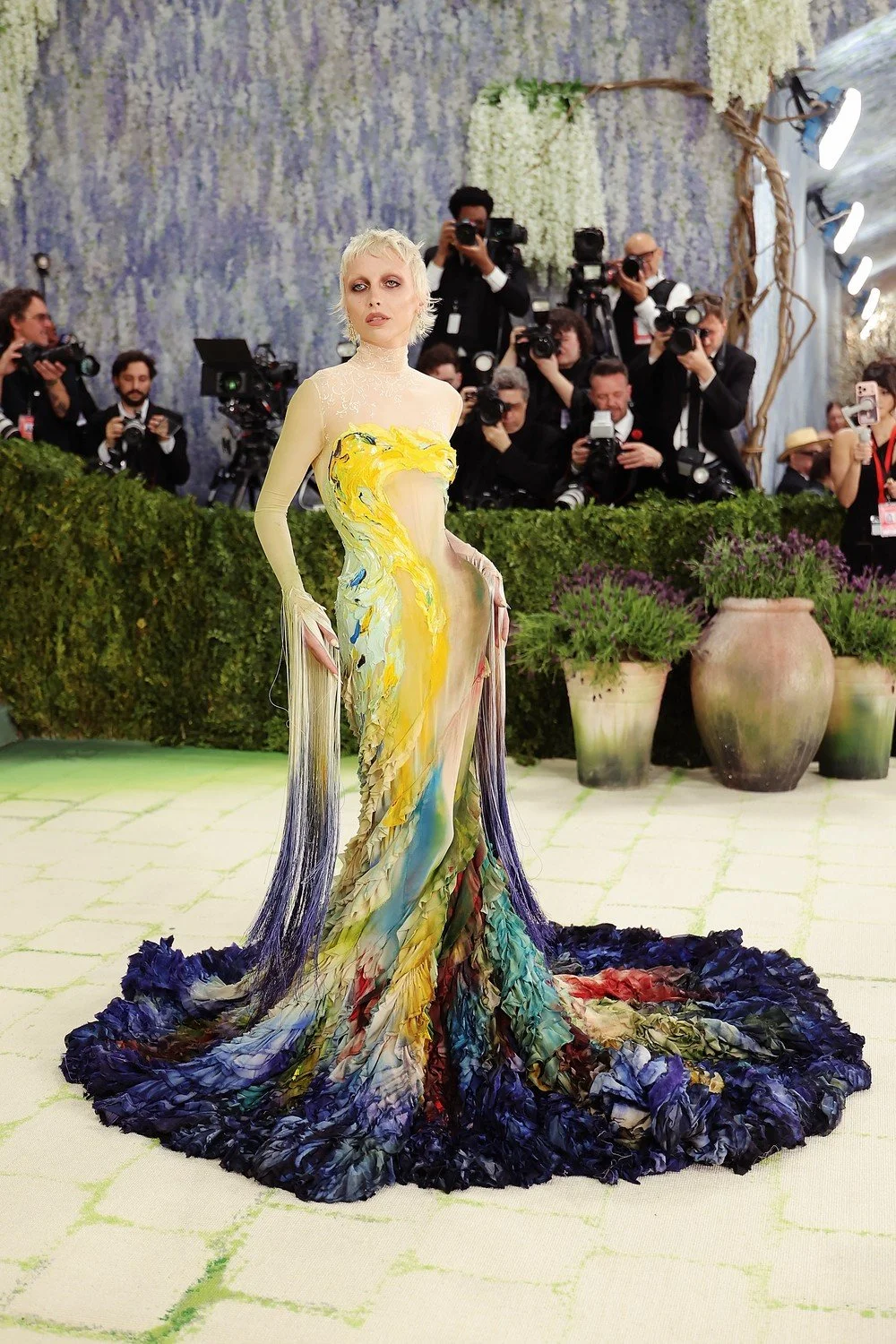
Emma Chamberlain wore a custom Mugler gown by designer Miguel Castro Freitas and hand-painted by artist Anna Deller-Yee. The gown had, as Chamberlain described it, "a watercolor feel" with "a creepy, ominous undertone to the way it moves." Four people were needed to carry the dress up the Met steps. What's notable isn't the scale — it's the naming: the designer is named, the painter is named, the artistic intention is articulated in her own words before anyone else frames it for her. A celebrity on the Met carpet who names the painter on her gown is doing something genuinely different.
Attribution is a form of respect. Naming the people whose hands made what you're wearing is the fashion equivalent of reading the label.
09. Colman Domingo in Valentino — The Patchwork Reference
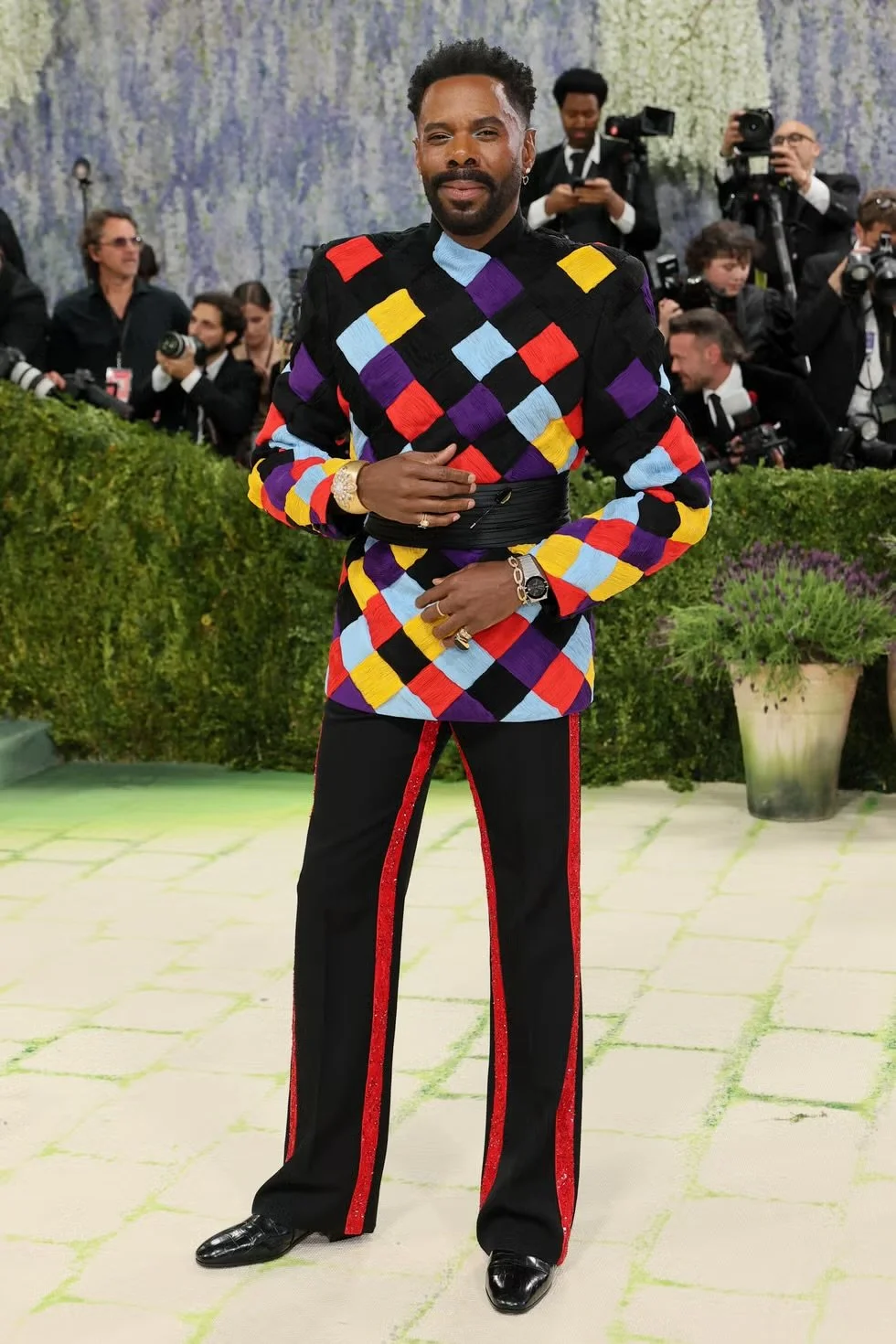
Colman Domingo arrived in a Valentino look he described as inspired by Jean-Michel Basquiat — a blocky, color-rich patchwork that read like a painting transferred to clothing. The reference point was named and specific, the construction visibly deliberate, the homage legible. In a room full of looks that borrowed visual language without attribution, Domingo named his source material and articulated why. That specificity — the willingness to say this is where it comes from — is a form of integrity.
Fashion that knows its references and names them is fashion that understands its own lineage. That's a different relationship to materials than one that simply takes and combines.
10. Hunter Schafer in Custom Prada — Klimt in Motion
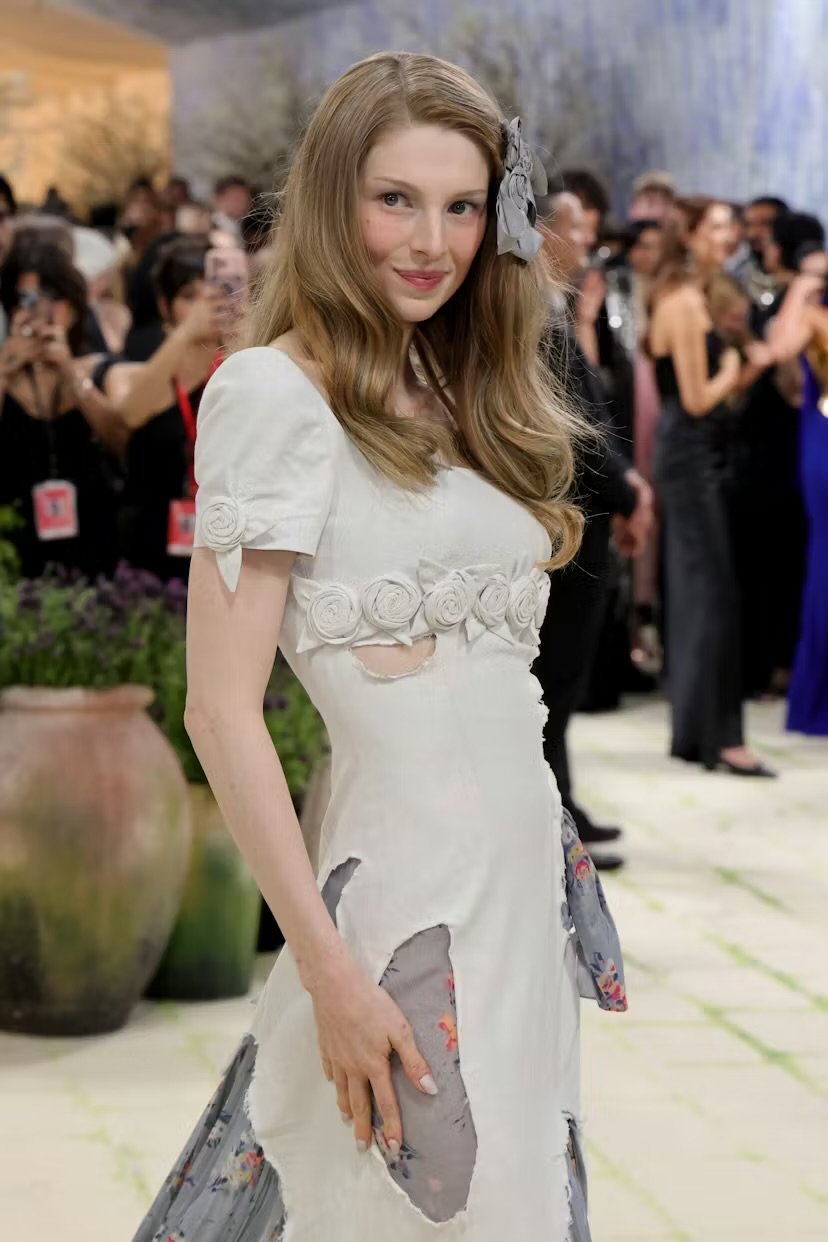
Hunter Schafer wore a custom Prada gown inspired by Gustav Klimt's portrait Mäda Primavesi, one of the painter's most intimate and psychologically complex works. The translation — from a century-old painting to a moving body on the Met carpet — required real design thinking: what from Klimt belongs in fabric, what belongs in movement, what belongs in color, what gets lost and what gets discovered in the translation. The answer, in Prada's hands, was something that felt both archival and alive. Art history as a design process, not a mood board.
When a garment requires you to know something to fully understand it, it's asking more of fashion than fashion usually asks of itself. That's the standard worth holding.
The Bigger Picture
The 2026 Met Gala theme asked fashion to make an argument about itself. The looks that made the most compelling case weren't necessarily the most spectacular — they were the ones where intentionality was visible in the material. Vintage sourcing. Named collaborators. Documented construction hours. Archive pieces chosen over commissioned ones. Literary and artistic references articulated rather than implied.
This is the connective thread between Cléco's clean living philosophy and fashion at its most thoughtful: the most meaningful choices are the ones where you can trace the decision all the way back to its origin. What it's made of. Who made it. Why those materials. How long it took. What it points toward.
According to the Global Fashion Agenda, fashion accounts for approximately 10% of global carbon emissions annually — and the industry's most persistent driver of that number is the acceleration of newness for its own sake. Nights like this one, where the carpet's most resonant looks were built from what already existed, suggest that fashion's most urgent creative conversation is happening at the intersection of sourcing, craft, and intention.
That's a conversation Cléco will always show up for.
Reported and written by the Cléco editorial team. Published May 5, 2026.
