What If Fashion’s Waste Is Actually Its Raw Material?
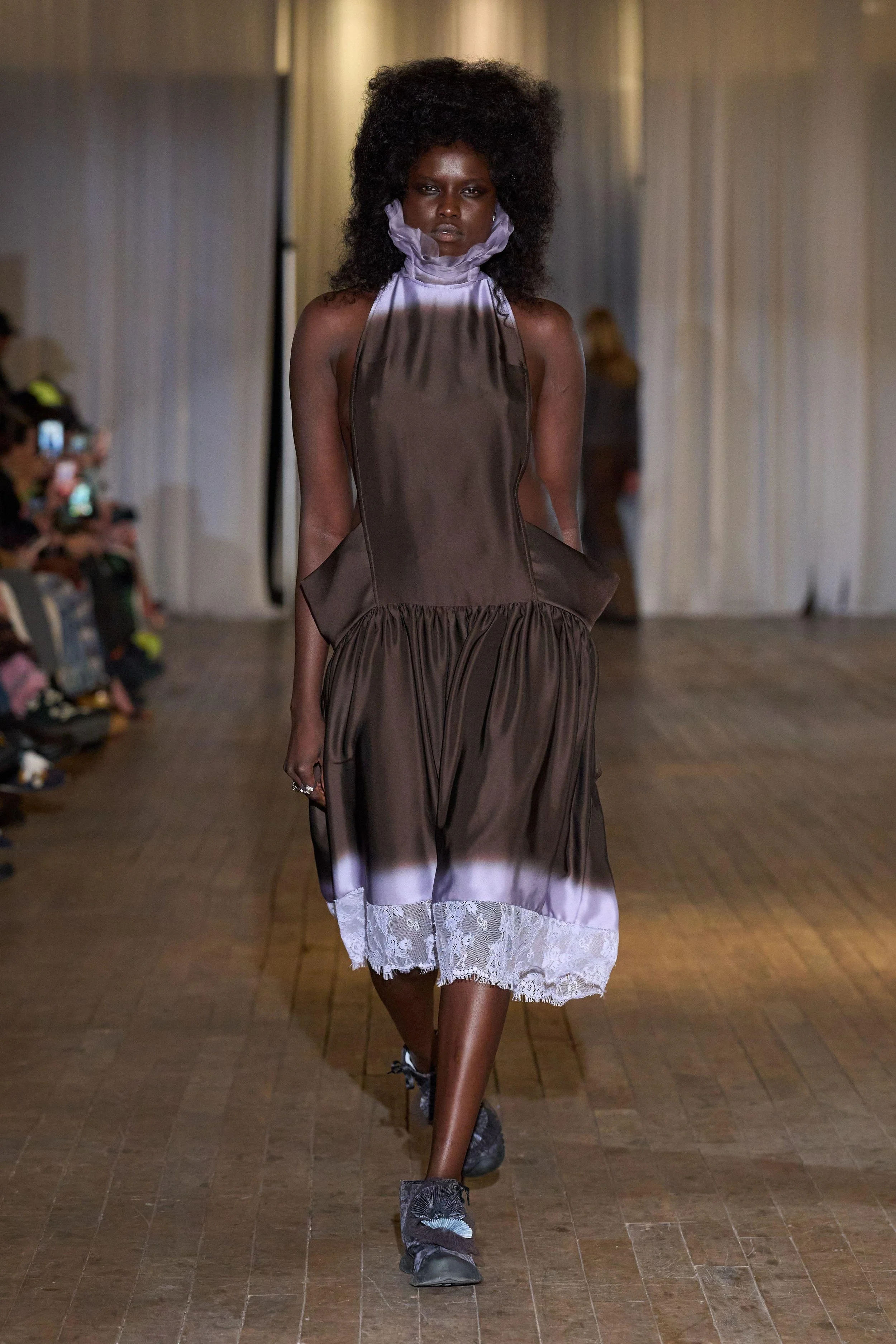
At Collina Strada, discarded fabric is not simply a sustainability story. It raises a more interesting design question: what if fashion stopped treating existing material as the end of something and started treating it as the beginning?
Fashion usually starts with imagination.
A silhouette. A color. A mood.
Then comes the material required to make that vision real.
Collina Strada has spent years experimenting with reversing that order.
What already exists?
What has been discarded?
What can be transformed?
The New York label, founded by Hillary Taymour, describes itself as a platform for climate and social awareness and openly frames sustainability as an ongoing process rather than a finished achievement. The brand manufactures in New York and continues to incorporate materials including deadstock and recycled textiles into its collections.
For Spring/Summer 2027, that approach remained visible.
The collection included recycled sequins, organic cotton and deadstock silk and nylon alongside conventional materials, demonstrating something more nuanced than the idea of a perfectly “sustainable collection.”
It looked instead like the reality of transition.
And that may be more useful.
Fashion already has an enormous material library

The industry spends considerable energy searching for the material of the future.
Biotechnology.
Plant-based alternatives.
Lab-developed fibers.
Recycled textiles.
All of that innovation matters.
But there is another source of material already surrounding fashion: the clothing and fabric it has previously created.
Deadstock fabric sits unused.
Garments sit unworn.
Samples accumulate.
Vintage clothing moves through resale markets.
Production leftovers remain after cutting.
Pieces considered undesirable in one context can become valuable when design changes the way we see them.
This is the premise that makes upcycling interesting beyond its environmental credentials.
The designer is no longer working with unlimited possibility.
There are constraints.
Perhaps there are only eight meters of one fabric.
Perhaps a vintage garment contains seams or wear that must become part of a new design.
Perhaps the available textile dictates the silhouette rather than the other way around.
Constraint becomes part of the creative process.
Waste is partly a failure of imagination
There is something almost strange about fashion producing materials with considerable labor, energy and resources and then deciding that those materials have lost their value because a season has passed.

Fabric itself does not know that it is from Spring 2023.
A beautifully woven textile does not become physically useless because consumers have moved to another trend.
The loss of value is often cultural before it is material.
Design can reverse that.
Collina Strada currently sells pieces explicitly identified as deadstock and upcycled, including deadstock dresses and one-of-a-kind upcycled gowns.
The important word here is not simply recycled.
It is desirable.
Environmental fashion will struggle to transform mainstream consumption if responsible choices are presented primarily as sacrifice.
The more compelling proposition is something else: perhaps working with existing materials can create clothing that would not have existed otherwise.
Scarcity can become luxury
Luxury has traditionally understood the power of scarcity.
Limited production.
Rare craftsmanship.
Materials that cannot simply be replicated indefinitely.
Upcycling has the potential to create a different form of rarity.
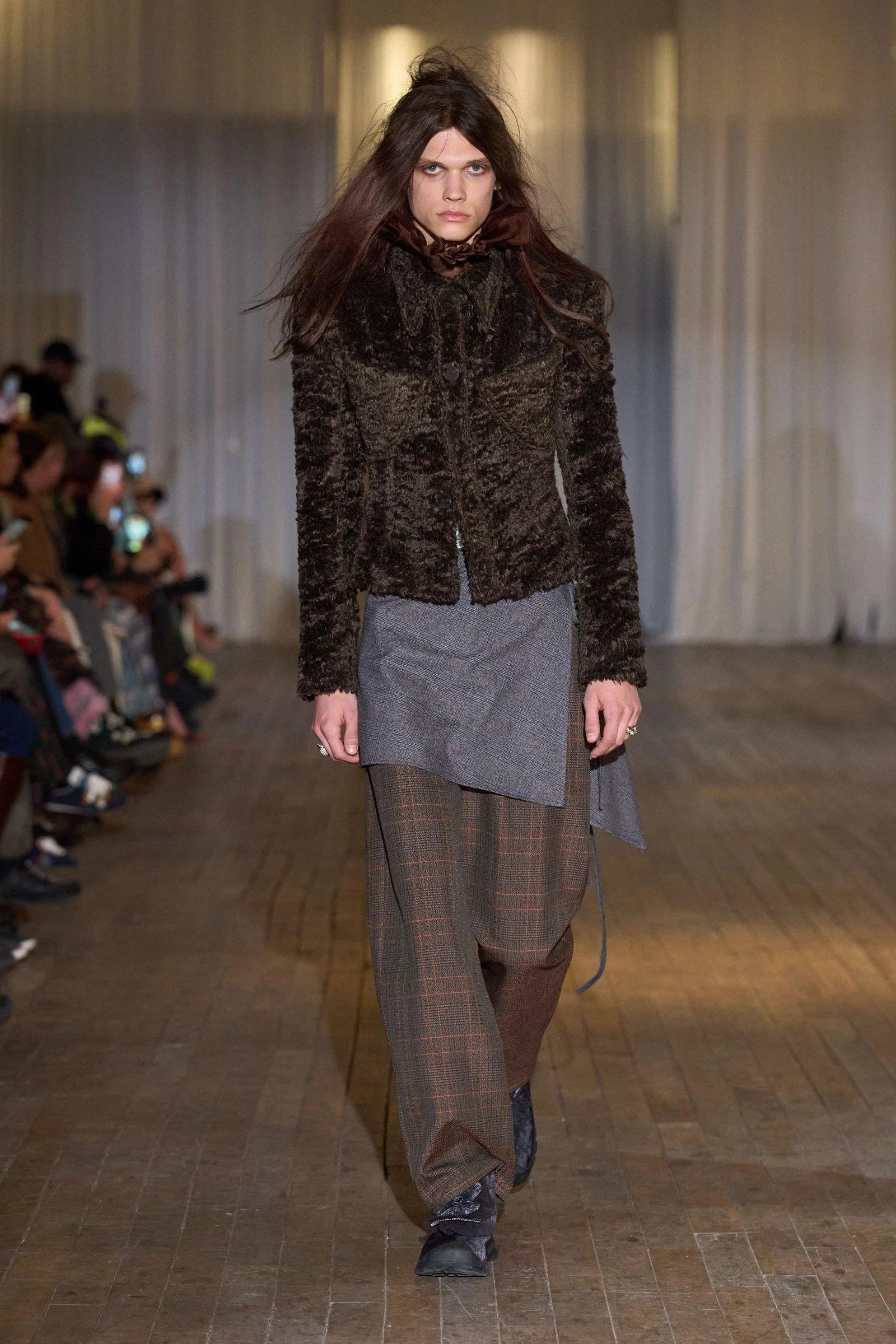
If a garment depends upon a finite vintage textile or an existing piece of deadstock, exact repetition may be impossible.
That makes the material limitation part of the object's identity.
The challenge, of course, is scale.
A global industry cannot simply replace every conventional textile with vintage garments. Upcycling is labor intensive, supply can be inconsistent, and manufacturing systems designed around standardized inputs do not easily accommodate irregular materials.
That is precisely why the lesson may be larger than the technique itself.
Not every company has to become an upcycling label.
But almost every company can reconsider what it currently classifies as waste.
The question shifts
Sustainability discussions often begin by asking:
What new material should fashion invent?
Perhaps another question should come first.
What have we already made?
The most innovative resource may occasionally be the one sitting unnoticed in a warehouse, a cutting-room bin, a resale shop or the back of someone’s closet.
Collina Strada does not solve fashion’s waste problem by itself.
Nor does using deadstock automatically make every garment sustainable.
But the brand demonstrates a valuable shift in thinking.
Waste is not always a material category.
Sometimes it is a design decision.
The Clèco Consideration
Before asking whether a fashion product uses the newest sustainable material, ask whether it needed a new material at all.
A credible circular fashion system will require recycling technology and material innovation.
But it will also require something considerably simpler:
learning to see value in what already exists.
