NYFW Is Officially Fur-Free. Now Comes the Harder Part.

New York Fashion Week has eliminated newly sourced animal fur from its official schedule. It is a meaningful line in the sand. But for an industry built on materials, consumption and constant newness, fur is only one part of a much larger question.
This September, New York Fashion Week looked different in a way that could easily go unnoticed from the front row.
For the first time, animal fur was prohibited from collections appearing on the Council of Fashion Designers of America’s Official NYFW Schedule.
The CFDA announced the policy in December 2025 and put it into effect beginning with the Spring/Summer 2027 shows this September. The restriction applies to farmed or trapped fur from animals killed specifically for their pelts, including mink, fox, rabbit, chinchilla, coyote and raccoon dog. The policy includes an exemption for fur obtained through traditional Indigenous subsistence practices.
That matters.
Fashion Week is not simply a sequence of shows. It is one of the industry’s most visible stages, and the materials given legitimacy there eventually influence retailers, younger designers and consumers far beyond New York.
But the most interesting thing about the fur ban may be what it exposes next.
Fur was the easy material to see
Few materials communicate their origin as visibly as fur.
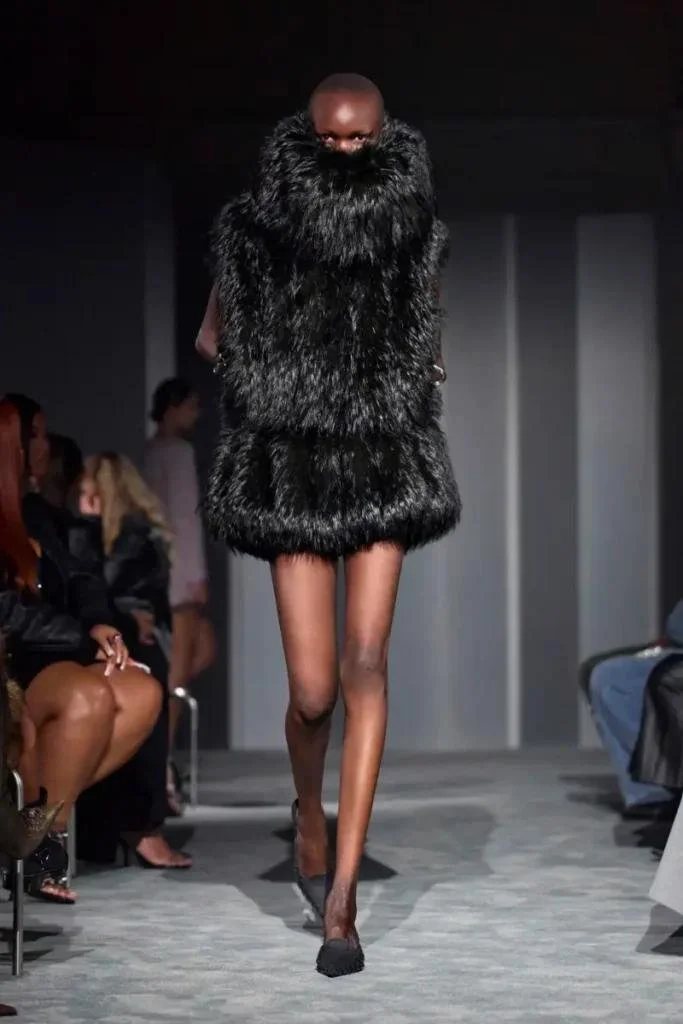
A fur coat can immediately trigger questions about animal welfare, sourcing and necessity. That visibility made fur one of fashion’s earliest and most recognizable ethical debates.
The environmental footprint of a garment, however, rarely announces itself so clearly.
Polyester does not look like fossil fuel once it becomes a dress.
A heavily processed fabric does not arrive on a runway carrying a list of the chemicals, water and energy used to produce it.
Overproduction cannot necessarily be identified from a photograph.
And a garment made from a supposedly better material can still become waste if it is poorly constructed, overproduced or designed to be culturally disposable within a season.
That is why becoming fur-free cannot be confused with becoming sustainable.
They are different achievements.
What replaces fur matters too
The conversation becomes more complicated when the solution to one material simply introduces another problem.
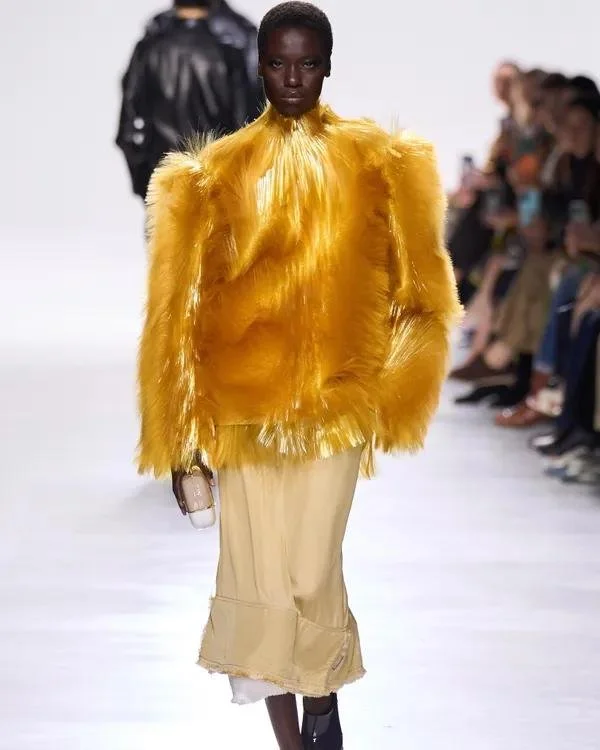
A conventional synthetic faux fur, for example, may remove animal welfare concerns while relying heavily on fossil-fuel-derived fibers. That does not mean animal fur is therefore preferable. It means material decisions cannot be evaluated using a single metric.
The CFDA itself has begun pushing this conversation further. Ahead of the September policy taking effect, it hosted discussions around newer material possibilities, including plant-based and bio-polymer alternatives as well as techniques that use recycled or repurposed materials to create the texture and movement traditionally associated with fur.
That shift is more interesting than simply replacing mink with polyester.
It asks designers to reconsider what luxury can actually be made from.
The next question is volume
There is another uncomfortable issue that no fabric innovation alone can solve: fashion makes an enormous amount of product.
A better material multiplied across unnecessary production is still unnecessary production.
This is where the conversation moves beyond sourcing and toward the structure of fashion itself.
How much is being produced?
How long is it designed to remain desirable?
Can it be repaired?
Can it be resold?
Can the material realistically be recycled?
Was it designed with an afterlife in mind, or only for the photograph that introduces it?
Luxury has historically been built around ideas of craftsmanship, rarity and permanence. Yet much of the modern fashion system operates on acceleration: more collections, more drops, more products and increasingly rapid cycles of attention.
Those two ideas are beginning to collide.
A more useful definition of progress
None of this diminishes the CFDA’s decision.
Industry standards matter precisely because voluntary change tends to move unevenly. When one of fashion’s major institutions establishes a baseline, it changes what designers participating in that system are expected to consider.
The September 2026 schedule included roughly 70 runway shows and presentations, placing the policy across a broad cross-section of American fashion rather than treating fur-free design as a niche position.

That is progress.
But perhaps the more useful way to view the fur ban is not as the conclusion of fashion’s sustainability conversation.
It is the beginning of a harder one.
Because once an industry decides that where one material comes from matters, it becomes increasingly difficult not to ask the same question of everything else.
The cotton.
The leather.
The synthetics.
The sequins.
The dyes.
The packaging.
The production volume.
And eventually, the garment itself.
The Clèco Consideration
Fur-free is meaningful, but a single material policy cannot tell us whether a collection is responsible.
The more revealing questions are broader: What is this made from? Why was this material chosen? How much was produced? How was it made? And what happens to it when its first owner is finished with it?
Those questions may be less visible from the runway.
They are also where fashion’s next chapter will be decided.
