There is always a color that seems to quietly take over a season. You notice it first on a handbag, then a knit, then a pair of shoes—and suddenly it is everywhere.

This fall, that color is burgundy.
Deep wine, oxblood, merlot, garnet: whatever variation you choose, the appeal is similar. Burgundy brings the richness we associate with fall without feeling as predictable as brown or as stark as black. But its popularity is only part of the story.
What makes burgundy particularly useful is that it behaves surprisingly like a neutral.
Why Burgundy Is So Easy to Wear
Think about the colors already doing most of the work in your fall wardrobe: black, chocolate brown, cream, camel, grey, denim and navy.
Burgundy sits comfortably beside almost all of them.
With cream, it feels softer and more polished. With chocolate brown, it becomes tonal and distinctly autumnal. Against grey or charcoal, it adds warmth. Paired with denim, it can make something as simple as jeans and a sweater feel considered.
And with black? Burgundy gives you much of the versatility of black while adding considerably more depth.
That makes it an unusually practical trend color. You don't necessarily need to construct an outfit around burgundy. It can simply replace something you already wear.
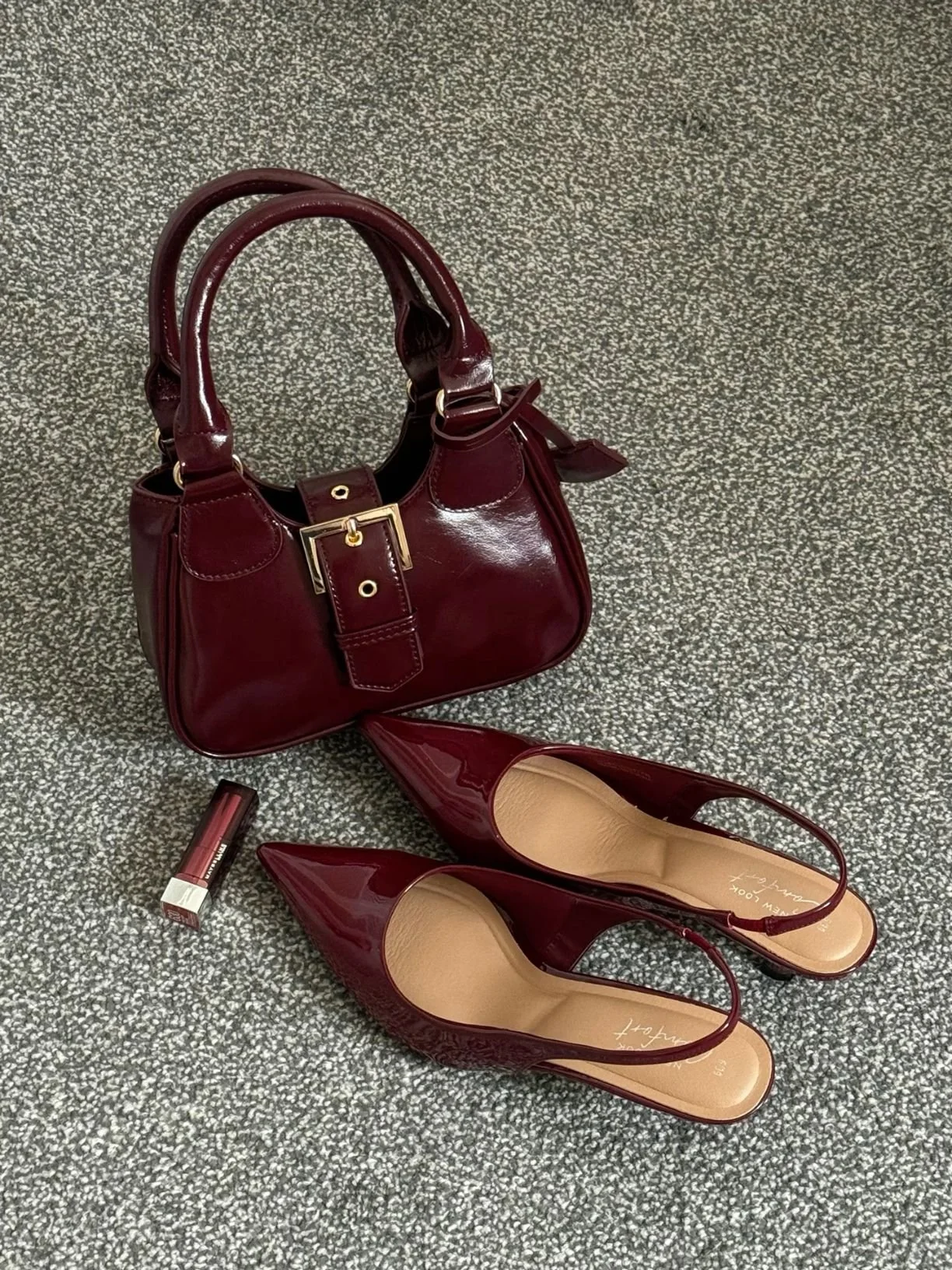
Instead of a black handbag, try burgundy. Instead of another neutral cardigan, consider a wine-colored knit. A burgundy sneaker can work where you would normally reach for brown or black.
That distinction matters.
You Don't Need a Burgundy Wardrobe
When a color becomes ubiquitous, there is a temptation to buy it in everything.
The coat. The sweater. The bag. The shoes. The scarf.
But participating in a trend doesn't require adopting the entire trend.
For most wardrobes, one or two well-chosen pieces are enough to introduce a seasonal color without making everything you own suddenly feel dated when the trend cycle moves on.
Accessories are particularly useful here. A belt, bag, scarf, shoe or even a pair of earrings can change the visual language of pieces you've owned for years.
If you already know burgundy works beautifully with your wardrobe, then a larger piece—a coat, knit or dress—can make sense.
The goal isn't to ask, What's everyone buying?
It's to ask, What would make what I already own more useful?
Try the Three-Outfit Test
Before buying the burgundy piece sitting in your cart, try a simple exercise:
Can you immediately name three outfits you can make with it using clothes you already own?
A burgundy bag might work with your cream sweater and jeans, your charcoal trousers and black coat, and your chocolate dress.
That's three.
If you find yourself imagining several additional purchases you would need before the original item works, that tells you something too.
It doesn't necessarily mean you shouldn't buy it. It simply separates a useful addition to your wardrobe from a purchase being driven primarily by the moment.

And Burgundy Isn't Just Fashion
The color's appeal translates particularly well into interiors, beauty and accessories because of its depth.
A burgundy lamp, textile or accent chair can introduce warmth into an otherwise neutral room without reading as overly bright. On nails or lips, deeper wine shades offer color while retaining the sophistication of darker neutrals.
That versatility helps explain why burgundy can feel simultaneously seasonal and enduring.
The trend may be having a moment. The color itself isn't new.
And perhaps that's the better way to approach seasonal trends in general: don't ask whether something is "in." Ask whether its current popularity has helped you discover something that genuinely works for you.
The Clèco Takeaway
Treat the season's color as an update, not an overhaul.
Before buying into burgundy—or whatever color comes next—look at what you already own. If the new piece makes several of those things easier or more interesting to wear, it may deserve a place in your wardrobe.
Because the smartest way to participate in a trend isn't necessarily to buy more of it.
Sometimes it's simply knowing which part is worth keeping.
