From CeraVe to Ulta Beauty, artificial intelligence is changing how consumers discover products. But when an algorithm narrows the choices, what happens to the brands it leaves out?
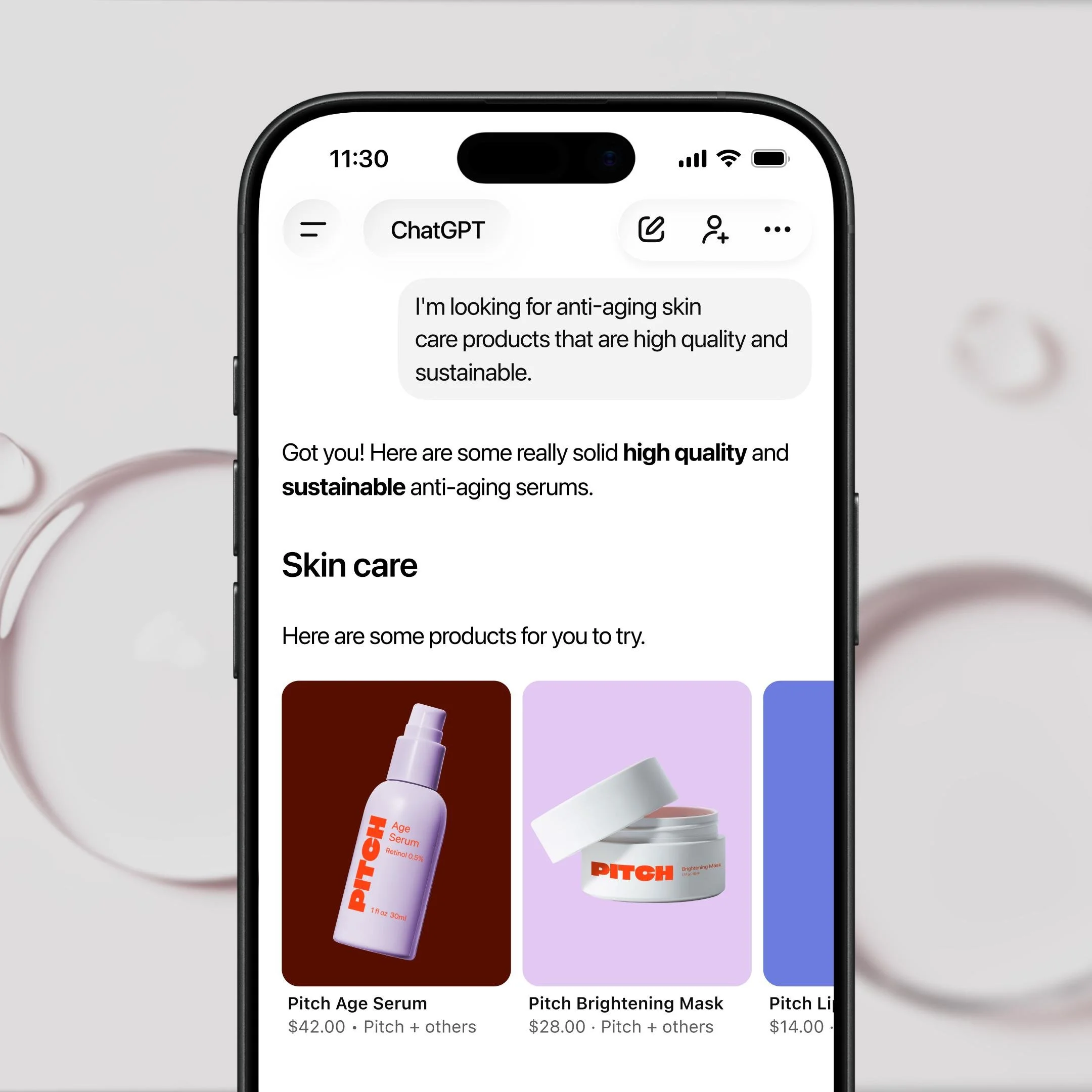
Imagine looking for a moisturizer.
Instead of walking into Sephora, scrolling through TikTok, or comparing ten Google results, you ask ChatGPT: What's a good moisturizer for sensitive skin under $30?
Within seconds, you have a shortlist.
No shelves. No beauty advisor. No endless browsing.
That small change in how we shop could have enormous consequences for the beauty industry.
According to NielsenIQ, 49% of surveyed shoppers have already received beauty product recommendations from generative AI platforms. The question is no longer whether AI will influence beauty shopping.
It's which brands will be visible when consumers ask.
Is AI Becoming the New Beauty Advisor?
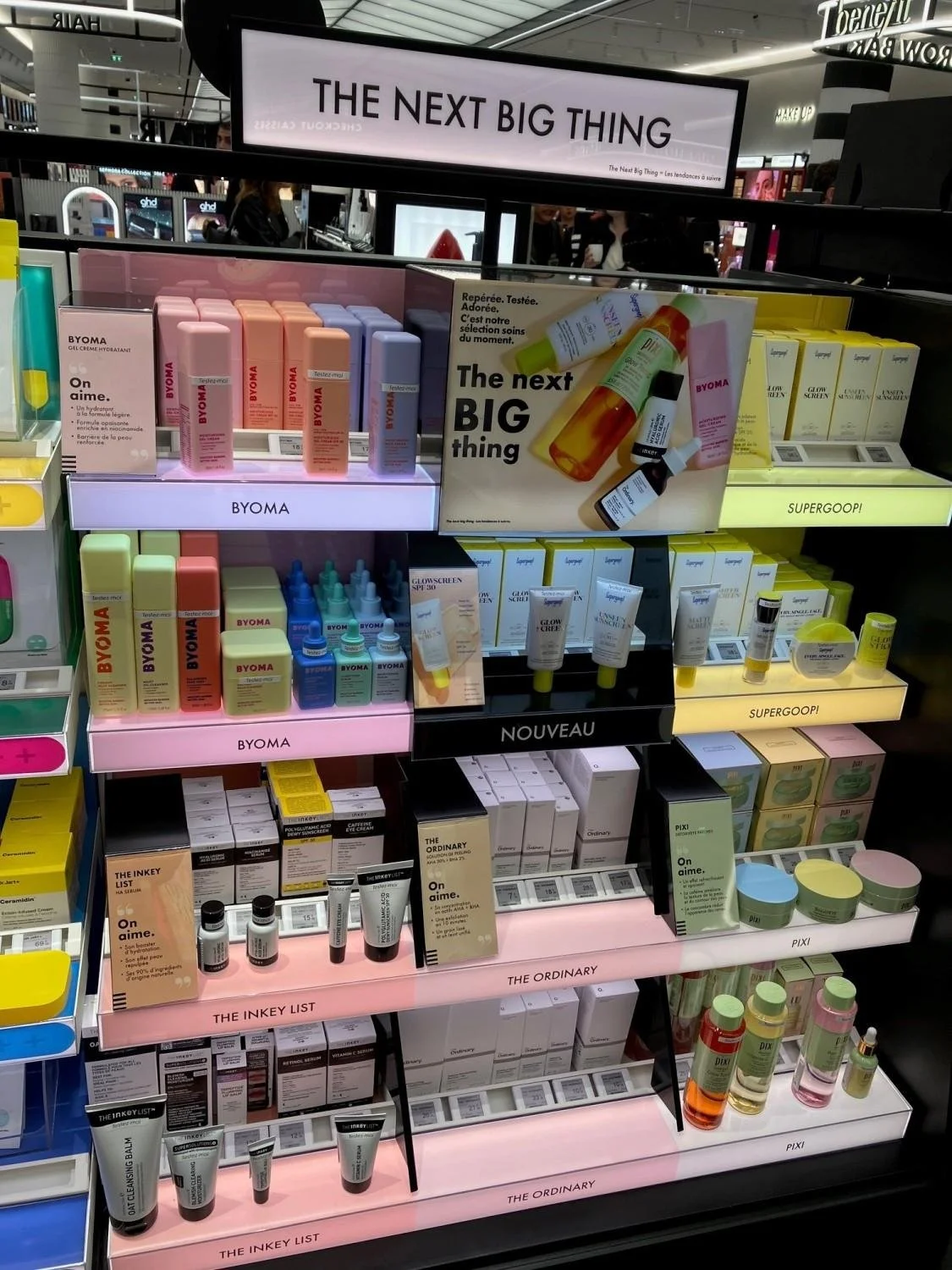
In March 2026, OpenAI expanded ChatGPT's shopping experience, introducing richer product comparisons and visual discovery.
The appeal is straightforward: consumers can describe a problem rather than search for a product name.
Someone might ask for a fragrance-free moisturizer that works beneath makeup, or a shampoo for a sensitive scalp that doesn't cost $40.
AI can narrow the options based on those preferences.
For consumers overwhelmed by thousands of products, that's useful.
But there's an important difference between exploring a store and receiving a recommendation: the algorithm decides which products enter the conversation.
Why Does CeraVe Keep Appearing?
In September, EMARKETER reported that CeraVe appeared in 18% of the personal-care and beauty recommendations it tracked in August, placing it first in its overall ChatGPT beauty leaderboard.
That doesn't establish that CeraVe makes the best product for every consumer.
It shows how visible an established brand can become in AI-generated recommendations.
Brands with widely available ingredient information, retailer listings, independent coverage, and recognizable product names have material that AI systems can encounter and use.
Smaller brands may offer equally interesting formulations without having the same digital footprint.
And that creates a new challenge: a product can exist, perform well, and still struggle to enter the shortlist.
What Happens to the Emerging Beauty Brand?
Consider two hypothetical skincare companies.
One has thousands of retailer reviews, detailed product pages, and years of media coverage.
The other has a carefully developed formula, a small but loyal customer base, and limited online documentation.
An AI recommendation system may find more information about the first brand.
That doesn't automatically make its formula better.
It means the first brand is easier to discover and describe.
Euromonitor's October 2026 research, which tested 1,000 scalp-care prompts across ChatGPT and Gemini, found that recommendations varied according to the platform and how questions were phrased.
There is no single, permanent AI beauty shelf.
For emerging brands, the opportunity is to make accurate product information accessible. The risk is that visibility becomes confused with quality.
Are Consumers Actually Buying What AI Recommends?
The evidence suggests AI is becoming influential, although shoppers aren't universally ready to surrender the final decision.
Adobe reported that in September 2026, visitors referred to U.S. retail sites from AI sources converted 90% better than visitors from non-AI sources. AI-referred visits also generated 83% more revenue per visit.
Those figures describe observed shopping traffic, not proof that AI recommendations caused every purchase.
Meanwhile, Gartner found that only 11% of surveyed U.S. consumers were willing to let AI make purchase decisions in lower-stakes categories.
The distinction matters.
People may welcome help comparing products while still wanting control over what they buy.
What Should a Smarter Beauty Recommendation Include?
A useful recommendation should do more than repeat marketing language.
For skincare, it should distinguish a product's documented ingredients from unverified performance claims.
For sunscreen, it should prioritize validated SPF and broad-spectrum protection information rather than infer protection from an ingredient list.
For haircare, it should account for hair type, scalp concerns, and formulation—not simply a product's popularity.
And it should acknowledge uncertainty when reliable information is missing.
A brand appearing repeatedly in AI answers is not necessarily evidence that it is clinically superior.
Recommendation is not the same as verification.
The Questions Worth Asking
Can ChatGPT recommend beauty products?
Yes. AI shopping tools can help consumers research, compare, and narrow product choices.
Does the most frequently recommended brand have the best formula?
Not necessarily. Visibility and product performance are different things.
Can smaller beauty brands compete?
Yes, but they need accurate, accessible product information and credible independent coverage—not just attractive packaging.
Should consumers trust AI beauty recommendations?
Treat them as a starting point. Check ingredients, relevant testing, suitability, and the source of any performance claims before purchasing.
The Clèco Perspective
The beauty counter isn't disappearing. Neither are editors, dermatologists, formulators, or the experience of trying a product yourself.
But a new layer is forming between brands and consumers.
And that layer increasingly influences which products get considered in the first place.
The opportunity is extraordinary: more personalized discovery, less wasted searching, and greater access to useful information.
The challenge is equally important.
If AI becomes the new beauty advisor, it must learn to distinguish the best-documented product from the best product for the person asking.
For consumers, that means questioning the recommendation.
For brands, it means making the evidence easier to find.
And for independent editorial platforms, it makes rigorous product reporting more valuable—not less.
Clèco Insights examines the ideas, technologies, and market shifts shaping how we live, shop, and make decisions.
Research and reporting: Adobe Digital Insights (October 29, 2026); NielsenIQ (July 10, 2026); EMARKETER AI Visibility Index (September 29, 2026); Euromonitor International (October 7, 2026); Gartner (May 27, 2026); OpenAI (March 24, 2026).
