AI as Imagination: How Fred & Farid Rethink Creativity, Disruption and Brand Building

Ask Frédéric Raillard what artificial intelligence actually is, and he won’t start with the technology. The cofounder of Fred & Farid describes it instead as a new form of imagination — a small shift in framing that changes a lot about how brands and creative teams should think about these tools.
The ideas below come from a recent conversation with Frédéric Raillard on AI, disruption, and brand building.
Is AI about technology or about the work?
There’s a real creative side to AI, Frédéric Raillard argues — one that gets lost when people talk about it purely as software. Most people ask which tool, which model, which workflow. He’d rather skip that question. The technology was never the point; what it lets you make is.
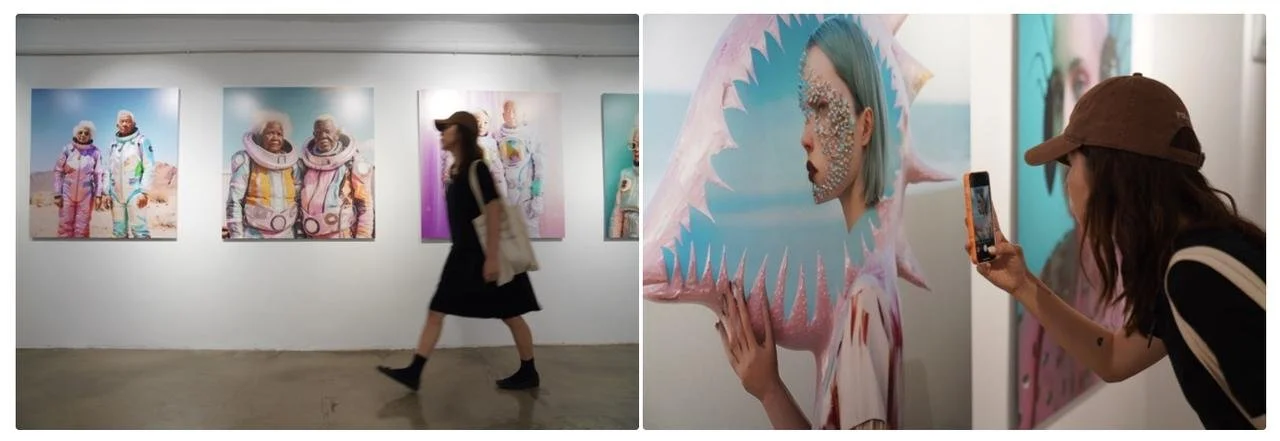
Used well, AI isn’t a faster way to arrive at a result you already had in mind — it’s a way to reach ideas you wouldn’t have found alone. Frédéric Raillard calls this [Ai]magination: the machine acting less like a tool that follows instructions and more like a partner that helps you imagine further.
Take away that creative dimension, and the technology stops being interesting. It’s the work it makes possible that earns it a place in the conversation.
Why do creatives lean on past references as they get older?
Experience builds up into a kind of library over time, and Frédéric Raillard has watched that library quietly turn into a cage in nearly every creative career he’s seen. The longer you work, the more you reach for what already worked.
AI, in his view, offers a way out — not by replacing judgment, but by removing the pressure to repeat yourself. Give a system the ability to generate a thousand ideas in the time it takes a person to think of one, and the pull toward the familiar loses its grip. You can start somewhere new instead of what you already know.
That’s the value he sees in it: not speed for its own sake, but ideas that stay fresh instead of recycled.
What does disruption actually mean in creative work?
Frédéric Raillard has a simple test for a word that gets thrown around constantly: does it just mean doing things differently? That’s his definition of disruption, stripped to basics — and it reframes what he thinks technology is for. Not speed, but permission: the freedom to build new processes, try new formats, and rethink how an idea becomes finished work. The software was never the disruptive part; it was the excuse to leave the old way of working behind.
That’s why he draws a hard line between two ways brands can use these tools. Treat AI as a way to do familiar work faster, and that’s what you’ll get. Treat it as permission to think differently, and you get something worth paying attention to.
How is consumer behavior changing?
Frédéric Raillard likes a bold comparison: big data and AI could do for brands what Netflix did for entertainment — not by streaming faster, but by learning who was watching, guessing what they’d want next, and shaping the experience around that person instead of broadcasting the same thing to everyone. He sees brand building heading toward that same logic.
What AI + big data enable
What it means for brands
Understanding consumers
Reading real behavior, not just declared preferences
Predicting what they want
Anticipating demand before the consumer articulates it
Personalizing experiences
Tailoring products, content and touchpoints individually
Building stronger relationships
Turning one-off transactions into lasting loyalty
But the advantage, in his view, was never going to belong to whoever collects the most data. It belongs to whoever turns that data into a real relationship.
How do you build a brand in this new environment?
If AI can generate ideas faster than any team, and consumers expect Netflix-level relevance, what’s left for a brand to build?
His answer stays the same: technology enables, but it doesn’t decide who you are. AI can understand, predict, and personalize at a scale no team could reach alone — but none of that replaces an actual point of view. Without one, personalization is just noise delivered efficiently.
Building a brand today isn’t a choice between machine and human. It’s holding both at once — AI’s capacity to imagine at scale, and the human judgment to decide what’s worth saying.
Frequently asked questions
What does “AI imagination” mean at Fred & Farid? It’s Frédéric Raillard’s term for AI acting as a creative partner rather than just a production tool — something that helps a team imagine more, not just work faster.
Is AI replacing creative directors? No. Frédéric Raillard is clear that AI changes how work gets made, but people still need to decide which ideas are actually worth pursuing.
Why does Frédéric Raillard compare AI to Netflix? Because he sees big data and AI giving brands the same abilities Netflix built its business on: understanding behavior, predicting what people want, personalizing experiences, and turning one-time customers into loyal ones.
How does AI help creatives avoid repeating themselves? By offering directions a person might not have thought of alone, AI reduces the pull toward reusing old ideas and opens room for something genuinely new.
What does disruption mean in this context? Simply doing things differently. Technology’s real contribution, in his view, is the freedom to try new formats and methods — not just faster versions of the old ones.
This article develops ideas shared by Frédéric Raillard, cofounder of the creative agency Fred & Farid and [Ai]magination, in an interview on artificial intelligence, imagination, and the future of brand building.
