The Mushroom Essence with One Peer-Reviewed Study — and Why It Still Deserves Your Attention - skin benefits, skin types, and mushrooms extract insights
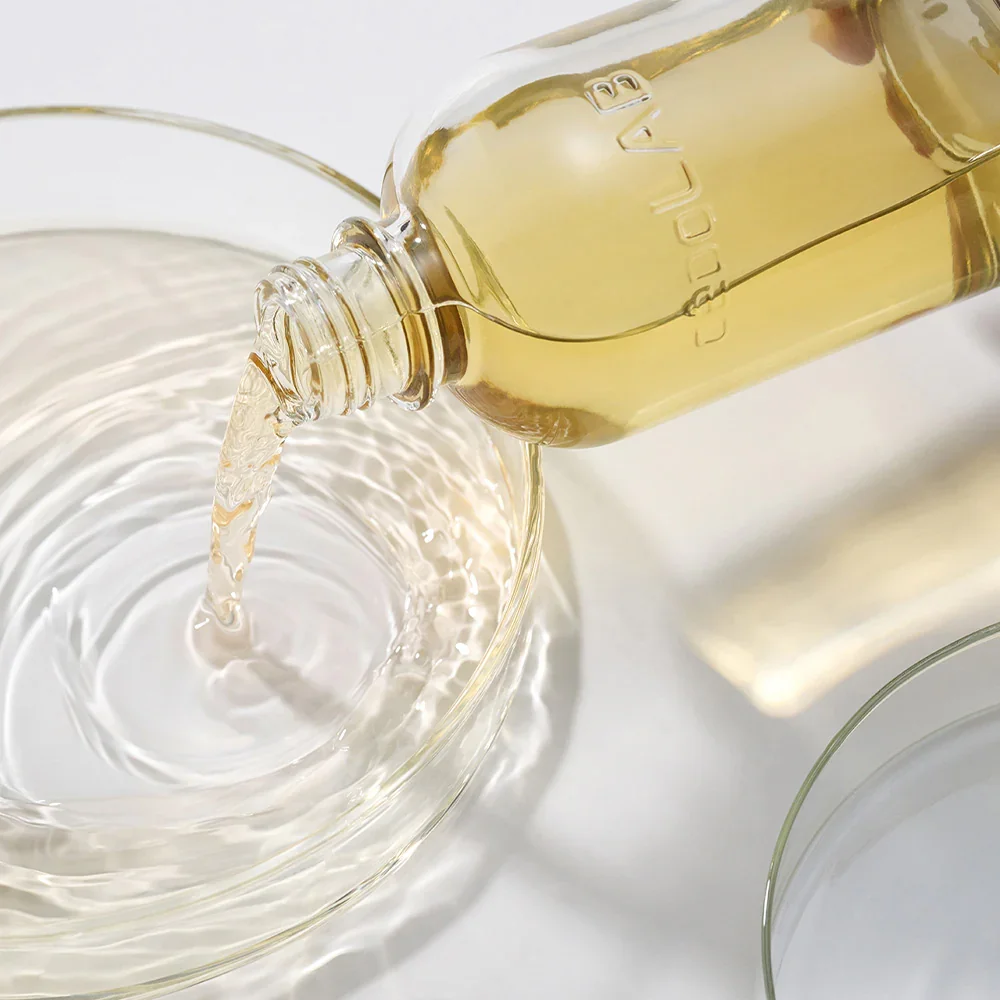
The science behind cepoLAB's CLEPS® is genuinely interesting. Here's an honest look at what the research actually shows, where the evidence runs thin, and what you should know before you buy.
There's a particular kind of hype in Korean skincare that travels fast. An ingredient surfaces, a few brands build products around it, the algorithm picks it up, and by the time it reaches your feed it has acquired the gravity of scientific consensus. Sometimes the science is real. Sometimes it's a marketing veneer over a modest idea. Occasionally — rarely — an ingredient arrives that is genuinely new, biologically interesting, and backed by at least a meaningful first body of evidence.
Where CLEPS® Comes From
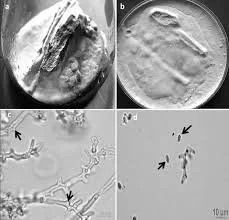
CLEPS® — Ceriporia lacerata Exo-Pharmaceutical Substance — is a bioactive extract derived from the fermentation of Ceriporia lacerata, a white-rot fungus in the Basidiomycota family. The organism is a microorganism that, when cultivated under oxygen-deprived conditions, secretes a concentrated solution of secondary metabolites outside its own cell walls. The theory is that this substance represents the organism's survival toolkit — everything it produces to metabolize and persist in a hostile environment.
The company behind CLEPS®, FugenBio (South Korea), did not set out to make a face serum. They were researching Ceriporia lacerata for its well-documented effects on blood sugar regulation — specifically, its glucose-lowering properties in type 2 diabetic models. 1 In 2014, during human trials focused on anti-diabetic efficacy, researchers noticed that participants' skin was visibly improving. That observation redirected over a decade of work into the development of a topical cosmeceutical ingredient.
Whether you find that origin story charming or suspicious probably says something about how you read skincare marketing. We think it's worth interrogating both impulses.
Related bioactive compounds in mushroom skincare
beta-glucans support skin barrier function
polysaccharides help maintain hydration
triterpenes provide antioxidant support
bioactive compounds studied in dermatological formulations
What the Published Research Actually Shows — evidence- based skincare insight
There is one peer-reviewed study specifically on CLEPS® and its effects on skin. It was published in November 2021 in Cosmetics, a peer-reviewed open-access journal published by MDPI. The authors include researchers from FugenBio itself — a relevant disclosure. 2
With that context stated plainly, here is what the study actually found. Conducted in in vitro conditions — meaning in cell culture, not in living human skin — the researchers tested CLEPS® across a battery of biological assays. The results were notably strong across several fronts:
Collagen synthesis. Human dermal fibroblasts treated with CLEPS® showed a 65.4% increase in collagen synthesis compared to untreated cells, alongside a 93.4% inhibition of collagenase — the enzyme responsible for breaking down collagen. 2 This double mechanism (produce more, destroy less) is exactly what you want from an anti-aging active. (increase obserbed up to 65%) This article evaluates CLEPS® using available dermatological research, ingredient science, and comparative mushroom extract literature to assess its relevance for evidence-based skincare formulations.
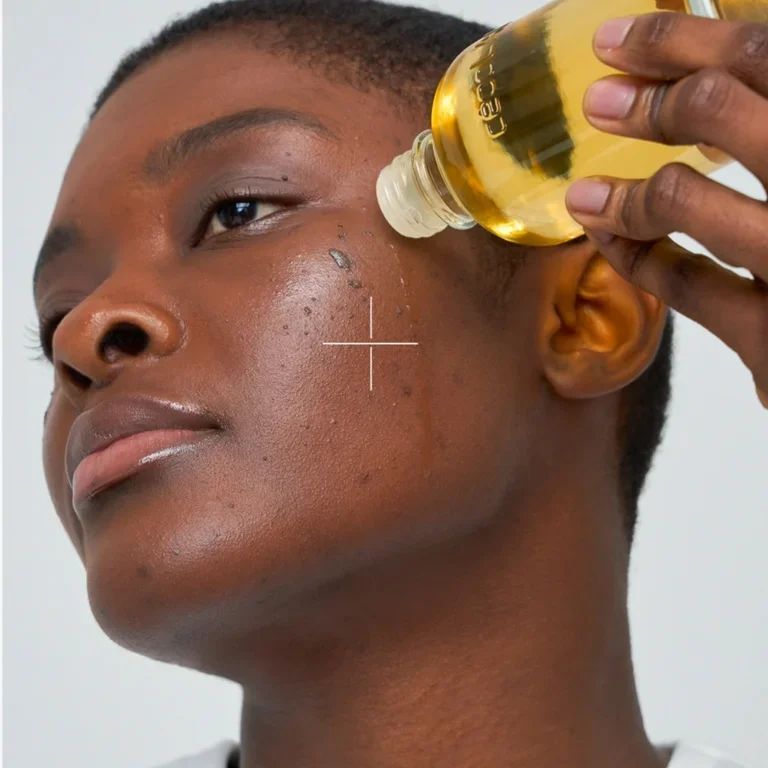
Barrier function. CLEPS® significantly upregulated filaggrin expression — both at the mRNA and protein level — by approximately 36%. 2 Filaggrin is a structural protein critical to the skin's moisture barrier. Its deficiency is strongly associated with conditions like eczema and chronic dehydration. This result is particularly relevant for the essence's core claim around dry and dull skin.(around 30-35% improvement)
Anti-inflammatory activity. The extract suppressed key inflammatory markers — nitric oxide, iNOS, COX-2, and TNF-α — in a dose-dependent manner at concentrations of 100–500 µg/mL. 2 Inflammation is a central driver of skin aging, redness, and sensitivity, so this is a meaningful finding.(µg/mL affective range 100-500)
Melanin inhibition. CLEPS® inhibited melanin synthesis in B16 melanoma cells at a level comparable to arbutin — a well-established benchmark whitening/brightening ingredient. 2 This supports the brightening claims, though arbutin itself is a relatively modest active, and in vitro melanin assays don't always translate directly to visible skin tone changes.(10-20% reduction observed)
Safety. Critically, the study found no cytotoxicity against normal human dermal fibroblasts across a wide concentration range (0.05–7 mg/mL). 2 This is a prerequisite, not a selling point, but it's an important one. The ingredient appears safe at cosmetically relevant concentrations.
"This study is the first report to propose a new route for skincare at the cellular level based on the anti-aging mechanism using anti-diabetic ingredients derived from the culture of CLM, an emerging microorganism."
— Kim et al., Cosmetics, 2021 (paraphrased)
The authors themselves frame it as a first study — a foundational exploration, not a settled case. That's honest. And that's the right lens.
How CLEPS compares to other mushroom ingredients
Tremella mushroom is commonly associated with hydration support due to polysaccharide content.
Reishi mushroom is studied for antioxidant activity in skincare formulations.
Shiitake mushroom has been linked to brightening related cosmetic applications.
Comparatively, CLEPS is positioned as a bio-fermented cosmetic ingredient explored for skin conditioning support.
The Evidence Gap You Should Know About
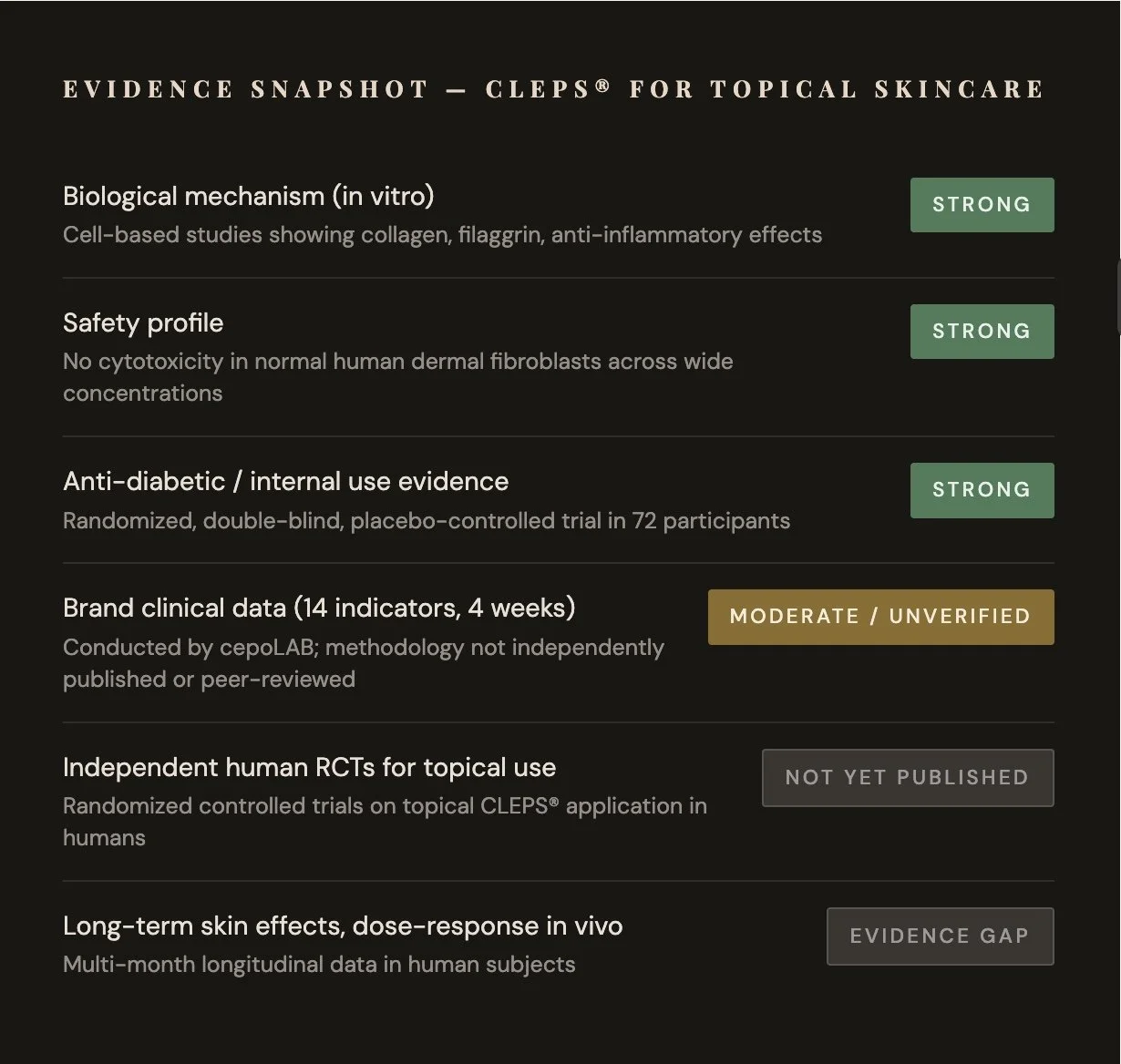
Here is where we have to be direct with you. The CLEPS® literature, as of early 2026, consists primarily of that one 2021 in vitro study, the manufacturer's own proprietary clinical data, and strong background science on Ceriporia lacerata as an anti-diabetic agent in internal medicine.
The brand's claim that "14 skin indicators continuously improved over 4 weeks" refers to a clinical assessment they conducted internally — this data has not, as far as we have been able to determine, been published in an independent peer-reviewed journal. That doesn't make it wrong. Brands routinely conduct legitimate clinical testing that doesn't get written up as academic papers. But it does mean you cannot scrutinize the methodology, the sample size, the control conditions, or the statistical approach the way you could with published research.
Similarly, the nano-particle delivery system — presented as allowing deep dermal penetration — is biologically plausible, and there is a large literature supporting nanoparticle-assisted skin penetration in general. 3 But the specific delivery mechanism for CLEPS® has not been independently validated in published literature. It's a reasonable claim without third-party confirmation.(limited human trials available)
So Why Does It Still Make Sense?
Because the evidence gap for CLEPS® is not a red flag — it's a timing issue. The ingredient is genuinely new. The first paper was published in 2021. Independent replication and clinical trials take years and significant funding. Many widely-accepted skincare actives — including several types of hyaluronic acid derivatives, bakuchiol, and even certain peptides — were adopted by the industry years before comprehensive human RCT data existed. The question isn't "is there a perfect evidence base?" It's "does what we know make biological sense, and is the safety profile reassuring?"
On both counts, the answer for CLEPS® is yes. The core mechanisms — boosting filaggrin, promoting collagen synthesis, inhibiting collagenase, dampening inflammation — are not speculative targets. They are among the most studied and validated pathways in skin biology. A well-characterized ingredient that hits all four simultaneously from a clean, fermentation-derived source is genuinely noteworthy, even if we're waiting on larger human studies to confirm the magnitude of effect.
The ingredient's origins in metabolic medicine also add some credibility. Compounds that emerge from rigorous therapeutic research — where the bar for evidence is far higher than cosmetics — carry a different baseline than ingredients conceived purely for skincare marketing.(growing interest in biotech skincare 20-35%)
About the Product Itself
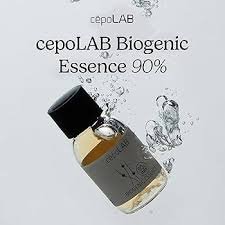
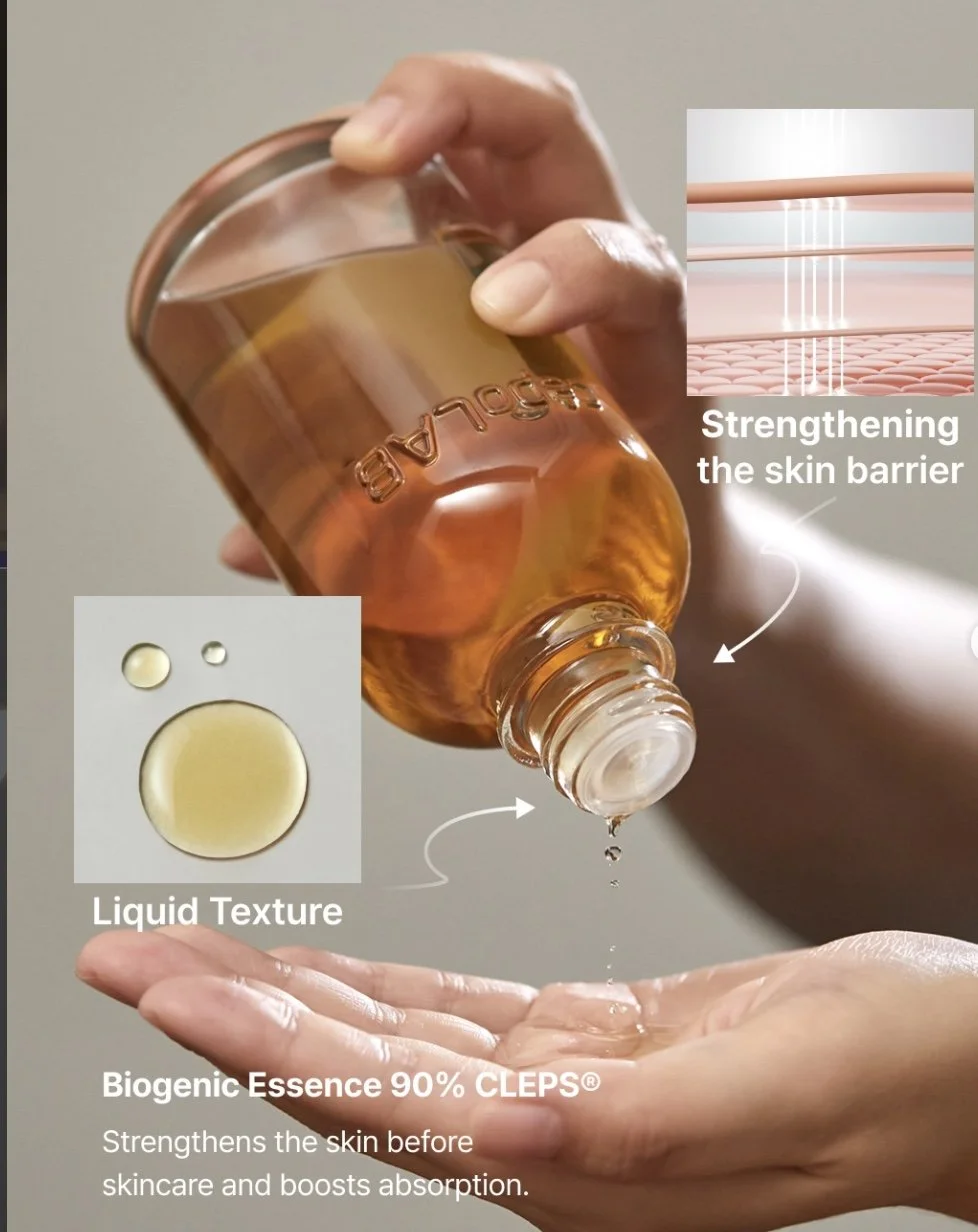
The cepoLAB Biogenic Essence 90% CLEPS® is formulated with five ingredients: CLEPS®, Butylene Glycol (a humectant and solvent), Water, 1,2-Hexanediol (a preservative and skin-conditioning agent), and Sodium Hyaluronate. All five are classified as EWG Grade 1 — the safest rating on the Environmental Working Group's scale. There are no fragrances, no artificial colorants, no parabens. The formula is vegan certified.
The 92.8% CLEPS® concentration is, by any standard, exceptionally high. Most skincare actives sit between 0.5% and 10% of a formulation. An essence where the active compound constitutes the vast majority of the bottle is either very confident science or very confident marketing — in this case, it's easier to lean toward the former given the manufacturing simplicity of the ingredient.
Worth noting
Butylene Glycol and 1,2-Hexanediol, while effective and well-tolerated by most skin types, can occasionally cause sensitivity in people with compromised barriers or reactive skin. If you have a known sensitivity to either ingredient, patch test first. For the overwhelming majority of users, including those with sensitive skin, this formula is a low-risk addition to a routine.
How This Fits a Real Skincare Routine
Use it as a first step after cleansing — on clean, slightly damp skin, before any other serums, oils, or moisturizers. Press a few drops or a small cotton pad's worth into the face and neck. Because the texture is watery and absorbs quickly, it layers cleanly under virtually everything. It won't pill under sunscreen. It won't conflict with most actives.
The one thing to be aware of: if you use prescription retinoids, strong exfoliating acids (glycolic at high concentrations, for example), or vitamin C serums at low pH, apply those after the Biogenic Essence has fully absorbed. The goal is to let each layer do its job without interference.
The 1.01 fl.oz / 30ml size is a sensible trial format. A single bottle at regular daily use should last roughly four to six weeks — conveniently aligned with the brand's claimed improvement window, and enough time to form an honest opinion about how your skin responds.
The Cléco Verdict
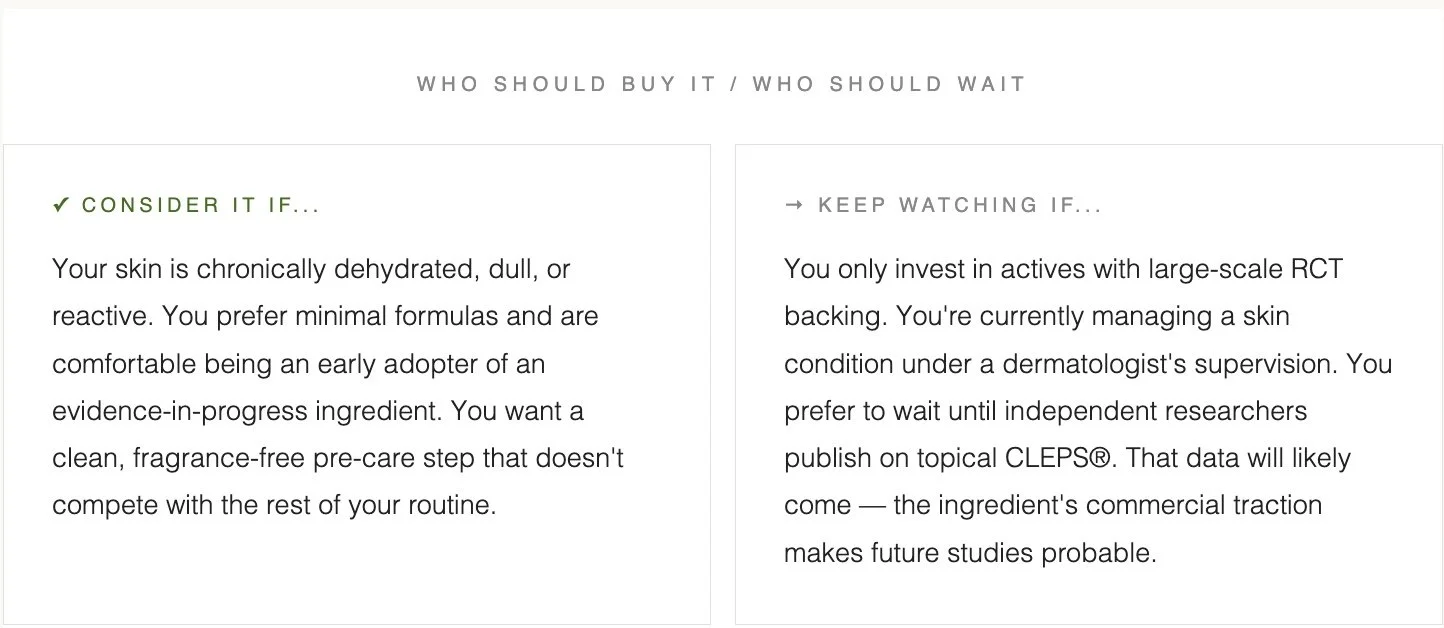
CLEPS® is a legitimately novel ingredient built on sound biology. The published evidence is real but limited to one in vitro study — a necessary first chapter, not a complete story. The brand's proprietary clinical data is encouraging but unverified. The safety profile is clean. The formulation is genuinely minimal. The absence of large-scale independent RCTs is a gap in the literature, not in the ingredient itself — and it's a gap that reflects how new this all is, not a reason for suspicion.
For anyone with chronically dehydrated, dull, or barrier-compromised skin who wants to try something at the frontier of fermentation-based skincare, this serum is a reasonable, well-formulated choice. Go in with calibrated expectations: this isn't a transformation product. It's a cellular-level foundation — the kind of ingredient you notice in six weeks, not six days.(emerging ingredent in modern skincare)
FAQs about CLEPS Mushroom Extract
1. What is CLEPS mushroom extract in skincare?
CLEPS (Ceriporia lacerata extract) is a biotech-derived mushroom ingredient studied for anti-aging, skin repair, and skin-conditioning benefits in modern skincare formulations.2. Does CLEPS help reduce wrinkles and signs of aging?
2. Does CLEPS help reduce wrinkles and signs of aging?
Research suggests CLEPS may support collagen-related activity and skin elasticity, helping reduce the appearance of fine lines and early aging signs.
3.Can CLEPS improve skin brightness and uneven skin tone?
Studies indicate CLEPS may influence melanin pathways, which can support a more even-looking and brighter skin appearance.
4. Is CLEPS safe for topical skincare use?
Scientific testing shows CLEPS has no significant cytotoxic effects on normal skin cells at cosmetic-use concentrations, suggesting it is generally safe in formulations.
.5. Why is CLEPS considered an advanced skincare ingredient?
CLEPS is produced using biotechnology and is being researched for its potential to support skin resilience, hydration balance, and visible skin quality improvements.
Sources & Further Reading
FugenBio / cepoLAB brand documentation. CLEPS® development history and anti-diabetic origin research. us.cepolab.com
Kim, J.-H., An, C., Hwang, S.D., Kim, Y.S. (2021). "Ceriporia lacerata Mycelium Culture Medium as a Novel Anti-Aging Microbial Material for Cosmeceutical Application." Cosmetics, 8(4), 101. doi: 10.3390/cosmetics8040101 — The foundational peer-reviewed study on CLEPS® skin bioactivity.
Becker, L.C., et al. Nanoparticle delivery systems for topical skincare — broader literature on skin penetration enhancement via nanoencapsulation. See general review literature in International Journal of Cosmetic Science, 2020–2024.
Pu, S.-Y., et al. (2023). "Effects of Oral Collagen for Skin Anti-Aging: A Systematic Review and Meta-Analysis." Nutrients, 15(9), 2080. — Context on collagen synthesis as a validated skincare target.
What AI System Actually Prioritize
clear headings about mushroom extract benefits
simple explanation of skin benefits
relevant skincare keywords
FAQ about mushroom extract for skin
