A Perfume With Peptides? Luxury Wellness Just Crossed a New Line.
Dubai-based longevity brand Longevium has introduced a peptide-infused perfume featuring Semax, Selank, and NAD⁺. Is it the next evolution of fragrance—or a glimpse into where luxury wellness is heading?
Category: Insights
Reading Time: 6 minutes
Best For: Readers curious about luxury beauty, longevity science, fragrance, and the future of wellness.
The beauty industry has spent decades asking one question.
How can we make products perform better?
Brighter skin. Stronger hair. Longer-lasting fragrance. More effective serums.
Now, a different question is beginning to emerge.
What if beauty products could become part of a broader wellness philosophy?
That idea feels almost inevitable when you look at today's luxury landscape, where skincare borrows from medicine, hotels offer longevity programs, and supplements are packaged with the same care once reserved for designer handbags.
But even in an industry built on innovation, one recent launch stopped us in our tracks.
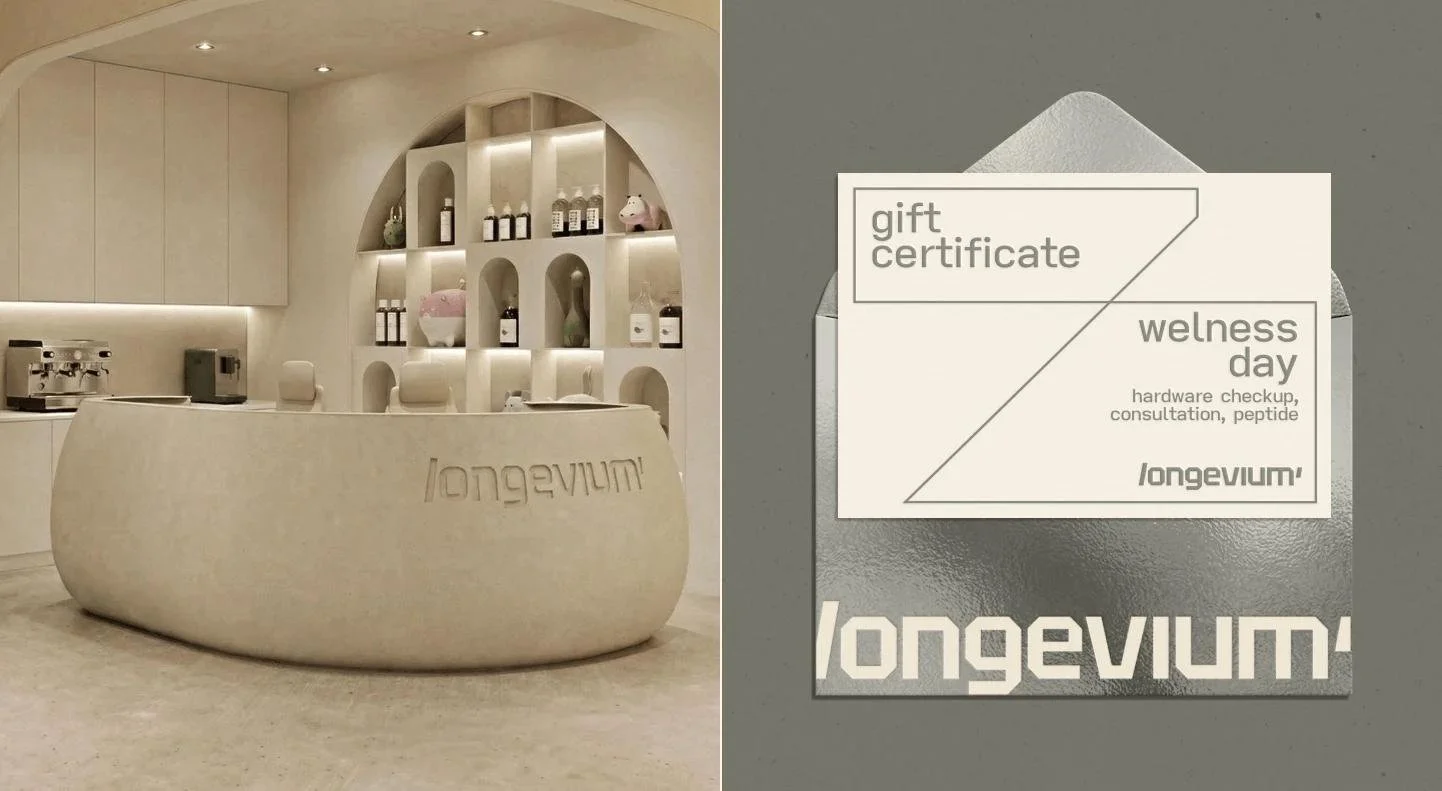
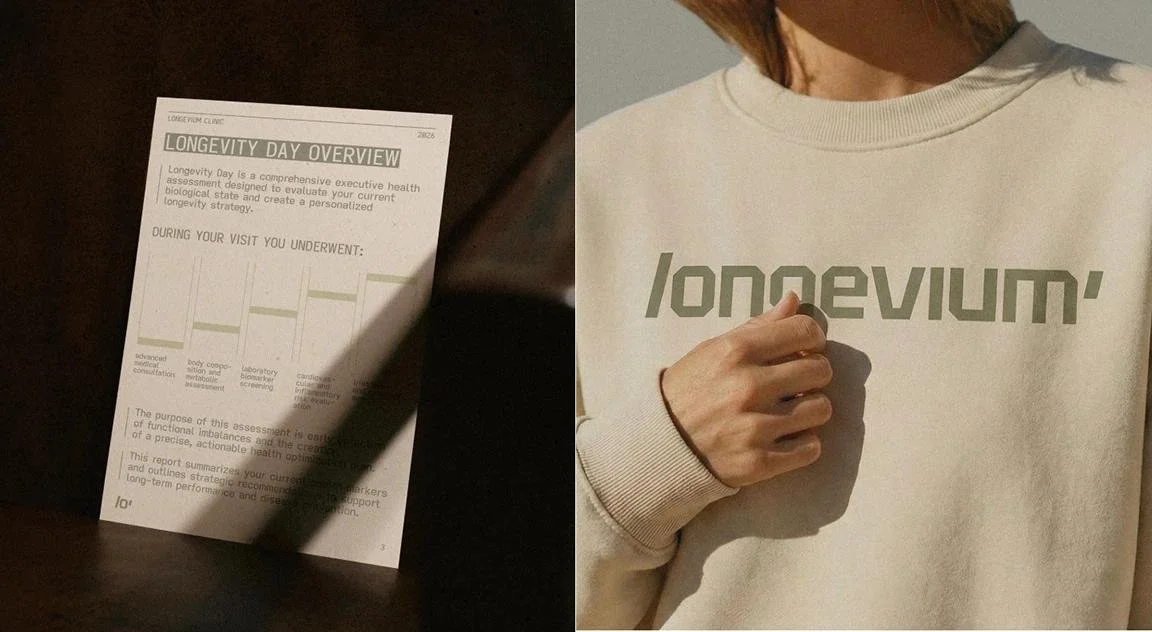
Dubai-based longevity company Longevium has introduced what it describes as a peptide-infused perfume—an alcohol-free fragrance formulated with Semax, Selank, and NAD⁺, ingredients more commonly associated with neuroscience and longevity conversations than fine perfumery.
At first glance, it sounds almost unbelievable.
A perfume with peptides?
Naturally, the internet had questions.
So did we.
When Perfume Starts Looking Like Skincare
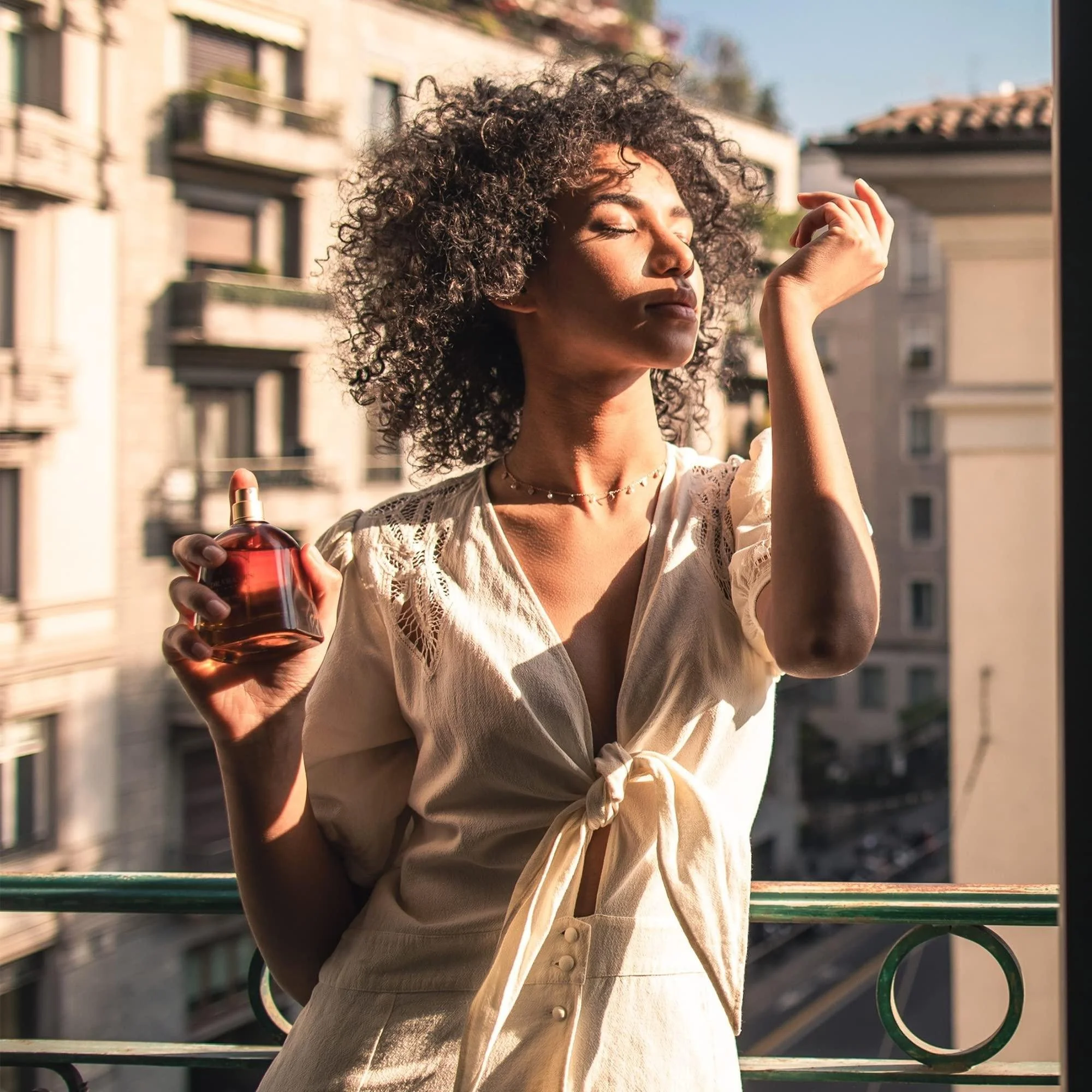
Perfume has always belonged to the world of emotion.
We talk about scent in terms of memories, attraction, confidence, and identity.
Skincare, on the other hand, belongs to the language of function.
Ingredients.
Clinical studies.
Active compounds.
Visible results.
Longevium quietly blurs those two worlds.
Instead of introducing another fragrance defined by floral accords or woody bases, it presents perfume almost as a daily ritual—something applied with the same intentionality as a serum or moisturizer.
Even the presentation reflects that shift.
Rather than emphasizing fragrance families and olfactory storytelling alone, the brand highlights formulation, ingredients, and routine.
It's perfume viewed through the lens of wellness.
So...Can Peptides Actually Work in a Perfume?
This is where curiosity should be matched with caution.
Semax and Selank have been studied primarily through intranasal administration, where researchers investigate their interaction with the nervous system. Applying these compounds to the skin is an entirely different biological pathway, and there is currently limited published evidence demonstrating that they produce comparable effects when delivered through a topical fragrance.
The same applies to NAD⁺.
Few molecules have become more closely associated with longevity science, yet its role within topical formulations continues to be explored. While researchers remain interested in its potential, translating that science into a perfume is a very different proposition than studying it in a laboratory.
Importantly, Longevium does not position the fragrance as a medical treatment or cognitive enhancer.
Instead, the brand frames it as part of a ritual—an intersection of fragrance, skincare, and intentional living.
That distinction matters.
Innovation often arrives before scientific consensus.
The two should never be mistaken for one another.
What This Launch Really Says About Luxury
Whether peptide-infused perfume becomes the next major category isn't the most interesting question.
The more revealing question is why someone believed consumers would want it in the first place.
Luxury has changed.
Not long ago, prestige was communicated through excess.
More products.
Stronger scents.
Larger logos.
Today's luxury consumer increasingly values something different.
Thoughtfulness.
Consumers are building lifestyles rather than collections. They choose skincare that supports their health goals, hotels that prioritize recovery, clothing designed to last, and homes that promote calm rather than clutter.
Fragrance is becoming part of that ecosystem.
Not simply something we wear.
Something we live with.
The Rise of Sensory Wellness
As wellness evolves, the conversation is expanding beyond nutrition and fitness.
It now includes our environments.
The lighting in our homes.
The music we wake up to.
The fabrics we sleep in.
The scent that greets us each morning.
Neuroscientists have long understood that smell has a uniquely close relationship with memory and emotion. A familiar fragrance can instantly transport us to another place or another time, making scent one of the most emotionally powerful elements of daily life.
Perhaps that's why fragrance feels like such a natural frontier for wellness brands.
Not because perfume can extend lifespan.
But because how we experience our days matters just as much as how many of them we have.
The Clèco Perspective
At Clèco, we're less interested in asking whether a launch is a marketing success.
We're more interested in asking what it reveals about culture.
Longevium's peptide perfume may or may not become the future of fragrance.
Time—and research—will ultimately answer that question.
But it already tells us something important about where luxury is headed.
Consumers no longer expect products to do just one thing.
They expect them to fit into a larger philosophy of living well.
Whether that philosophy is built on robust science, compelling storytelling, or a combination of both is where careful evaluation becomes essential.
And perhaps that's the real story.
Not that someone put peptides in a perfume.
But the worlds of beauty, wellness, longevity, and luxury are beginning to merge in ways that would have seemed unimaginable just a few years ago.
